Pat the brisket dry with paper towels—this is crucial for achieving a good crust when browning. Combine salt, pepper, and flour in a small bowl, then season the brisket generously on all sides, patting the mixture firmly so it adheres. Let the seasoned brisket rest at room temperature for 15-20 minutes while you prepare the vegetables. Preheat your oven to 350°F.
Heat the oil in a large Dutch oven or heavy-bottomed pot over medium-high heat until it shimmers. Carefully place the brisket in the pot and sear for 5-7 minutes per side, resisting the urge to move it—this creates a flavorful brown crust. I always look for a deep golden-brown color on both surfaces, as this builds tremendous flavor through the Maillard reaction. Once browned, transfer the brisket to a clean plate.
In the same pot with the browned bits still clinging to the bottom, add the sliced onions and cook for about 15 minutes, stirring occasionally, until they soften and begin to caramelize. Once the onions are golden and translucent, stir in the tomato paste and cook for 2-3 minutes to caramelize it slightly, which deepens its savory flavor. This foundation creates a rich braising liquid that will braise the meat beautifully.
Return the seared brisket to the pot, nestling it on top of the onion mixture. Scatter the smashed garlic cloves and carrot chunks around (not on top of) the meat, then pour the beef stock around the edges to prevent scorching and add depth to the braising liquid. Tuck the thyme sprigs into the vegetables, cover the pot with a tight-fitting lid, and place it in the preheated 350°F oven. Braise for 1.5 hours without opening the lid—this allows the meat to begin tenderizing gently.
Remove the pot from the oven and carefully transfer the brisket to a cutting board. Slice it against the grain into half-inch thick pieces—I find that a sharp carving knife and a deliberate, single-motion slice (rather than sawing) keeps the meat tender. Return the sliced brisket to the pot in a single layer, pouring any accumulated juices over it. I like to arrange the slices so they nestle back into the braising liquid and vegetables for more even cooking and flavor absorption. Reduce oven temperature to 325°F, cover the pot, and return it to the oven for another 1.75-2.5 hours until the meat is fall-apart tender when tested with a fork.
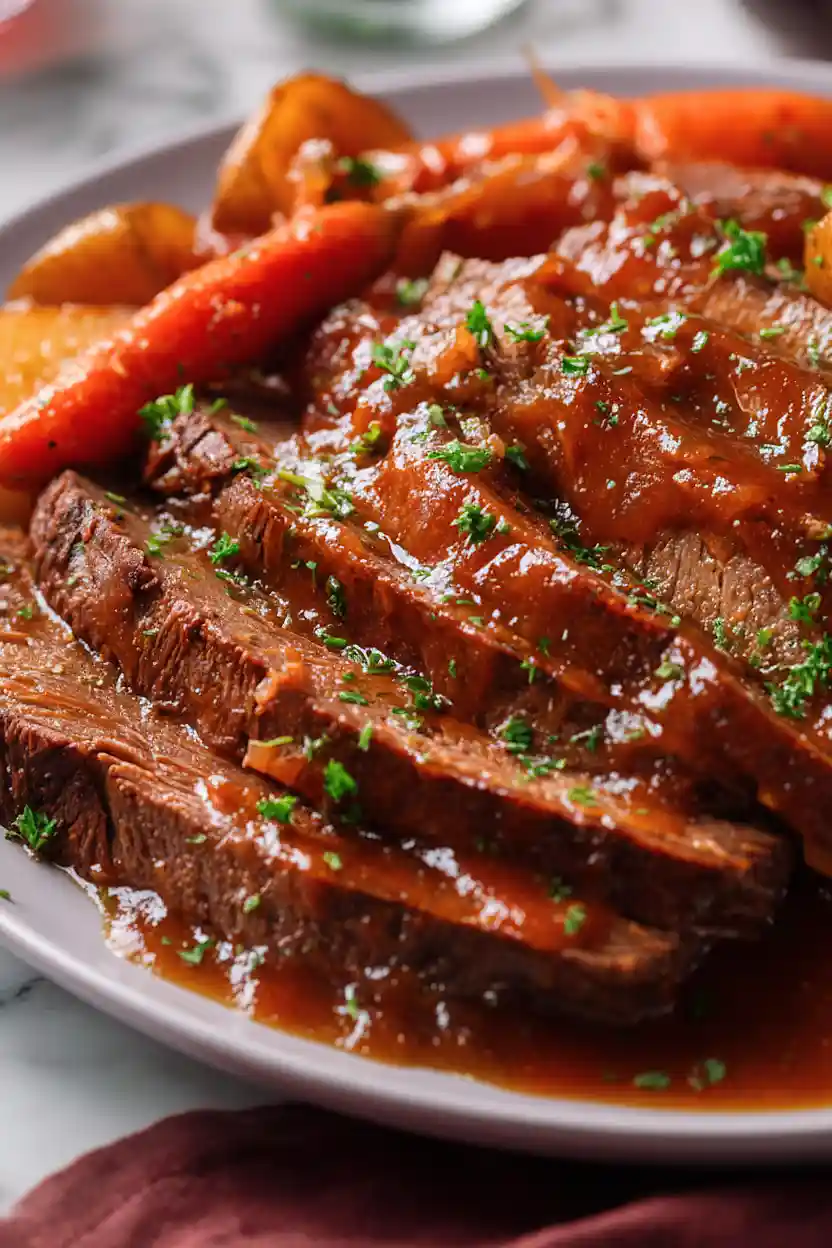
Remove the pot from the oven and let it rest for 5 minutes before serving. The brisket should be incredibly tender and the braising liquid rich and glossy from the rendered fat and collagen. Taste the liquid and adjust seasonings if needed. Spoon the meat, vegetables, and braising liquid into serving bowls or onto a platter, then garnish generously with fresh chopped parsley for brightness and color contrast.