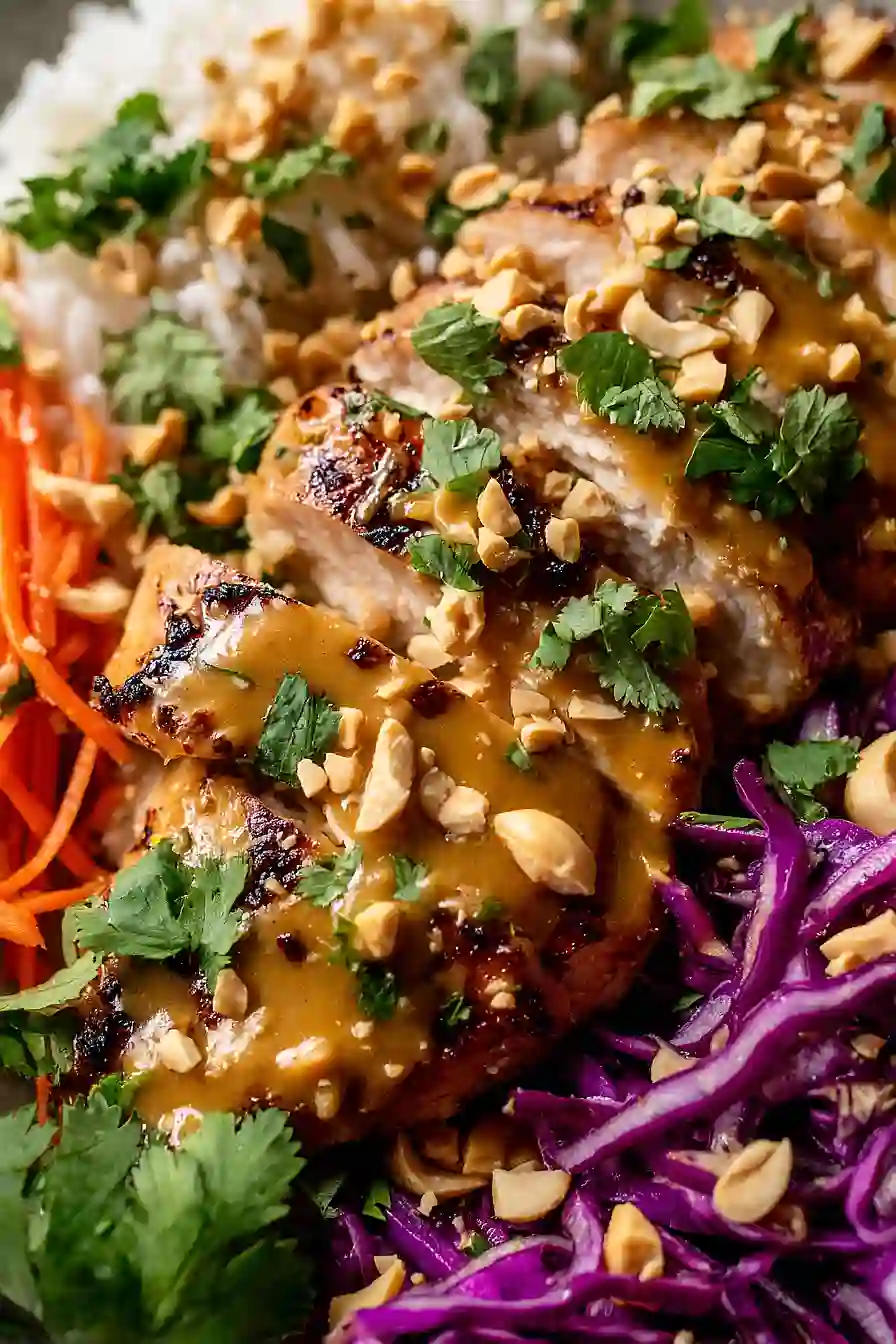
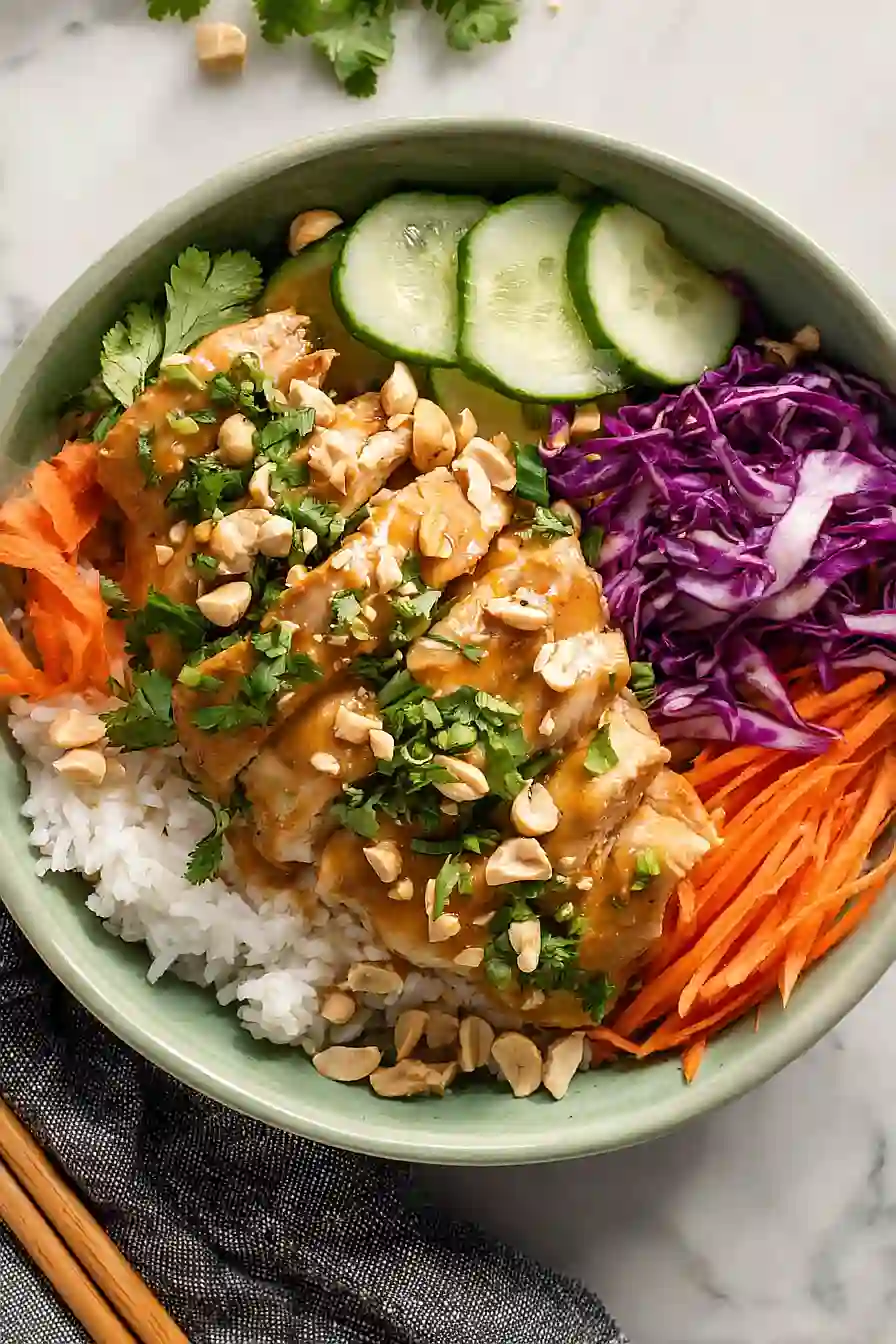
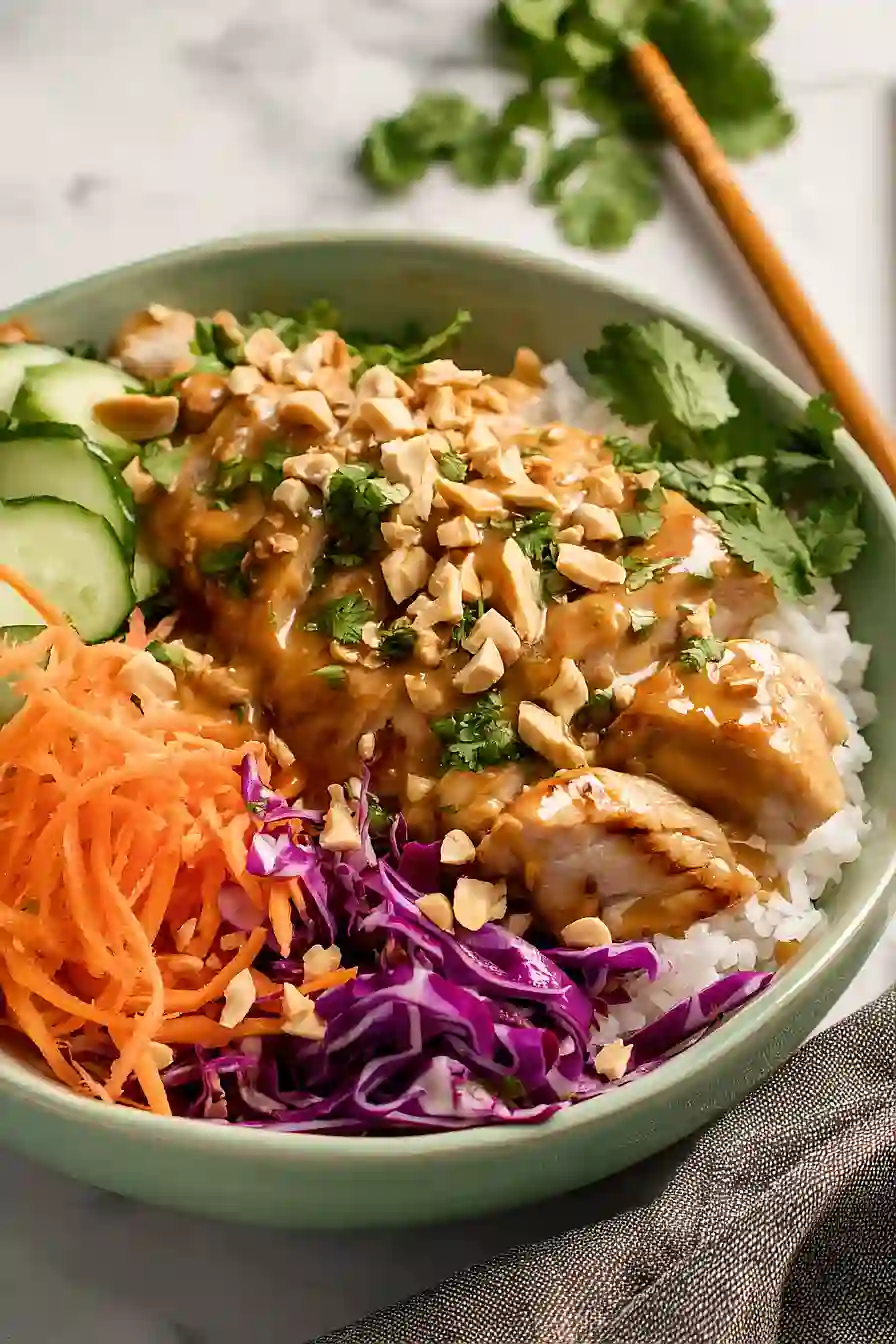
Here are my delicious Thai chicken bowls, with tender chunks of chicken in a soy-sesame glaze, served over jasmine rice with crunchy cabbage, shredded carrots, and the most amazing peanut sauce drizzled on top.
These bowls have become our go-to weeknight dinner because they come together quickly and my kids actually eat their vegetables without complaining. Plus, you can prep everything ahead of time and just assemble when you’re ready to eat.
Why You’ll Love These Thai Chicken Bowls
- Meal prep friendly – These bowls are perfect for making ahead and enjoying throughout the week, saving you time on busy weeknights.
- Balanced and nutritious – You get lean protein, fresh veggies, and whole grains all in one bowl, making it a complete meal that keeps you satisfied.
- Restaurant-quality flavor at home – The creamy peanut sauce with honey, lime, and Sriracha tastes just like your favorite Thai takeout, but you control the ingredients and save money.
- Customizable heat level – You can easily adjust the Sriracha to make it mild for kids or spicy for those who love a kick.
- Simple ingredients – Most of these items are pantry staples or easy to find at any grocery store, so you won’t need to hunt down specialty ingredients.
What Kind of Chicken Should I Use?
For this recipe, boneless, skinless chicken breasts are called for, but you’ve got some flexibility here. If you prefer dark meat, boneless, skinless chicken thighs will work just as well and actually stay a bit more moist during cooking. When shopping, look for chicken breasts that are roughly the same size so they cook evenly – if you end up with one really thick breast, you can always butterfly it or pound it to an even thickness. Fresh or frozen chicken both work fine, just make sure frozen chicken is completely thawed before you start marinating and cooking.
Options for Substitutions
This recipe is pretty forgiving when it comes to swaps, so feel free to work with what you have:
- Chicken breasts: Chicken thighs work great here and actually stay more tender. You can also use shrimp or tofu – just adjust the cooking time accordingly (shrimp cooks in about 3-4 minutes per side, tofu can be pan-fried until crispy).
- Jasmine or white rice: Brown rice, cauliflower rice, or quinoa all work well. Keep in mind brown rice takes longer to cook (about 45 minutes), while cauliflower rice cooks in just 5-7 minutes.
- Peanut butter: Almond butter or sunflower seed butter make good substitutes if you have a peanut allergy. The flavor will be slightly different but still tasty.
- Cabbage: You can use a coleslaw mix to save time, or swap in shredded lettuce, kale, or spinach if that’s what you have on hand.
- Sriracha sauce: Any hot sauce works here – try sambal oelek, chili garlic sauce, or even red pepper flakes mixed with a little vinegar. Adjust the amount based on your heat preference.
- Soy sauce: Tamari is a great gluten-free option, or use coconut aminos for a soy-free version. Both work the same way as regular soy sauce.
Watch Out for These Mistakes While Cooking
The biggest mistake with chicken breasts is overcooking them, which turns them dry and tough – pull them from the oven when your instant-read thermometer hits 155°F in the thickest part, and the residual heat will bring them up to the safe 165°F while keeping them juicy.
Don’t skip the resting time after baking, as cutting into the chicken immediately causes all those flavorful juices to run out onto your cutting board instead of staying in the meat.
For the peanut sauce, start with just one tablespoon of hot water and add more only if needed – it’s much easier to thin out a thick sauce than to fix one that’s too watery.
Finally, make sure your chicken actually marinates for the full 30 minutes rather than rushing it, since this short wait makes a real difference in flavor and helps the meat stay moist during cooking.
What to Serve With Thai Chicken Bowls?
These bowls are pretty filling on their own, but I love adding some crispy spring rolls or vegetable dumplings on the side for extra crunch. If you want to keep things simple, edamame sprinkled with sea salt makes a great starter that fits right in with the Asian flavors. For a lighter option, cucumber salad with rice vinegar and a pinch of sugar is refreshing and helps balance out the rich peanut sauce. Sometimes I’ll also throw in some extra veggies like snap peas or bell peppers right into the bowl to bulk it up even more.
Storage Instructions
Store: These Thai chicken bowls are perfect for meal prep! Keep the components separate in airtight containers in the fridge for up to 4 days. Store the chicken, rice, and veggie slaw separately so everything stays fresh and the cabbage doesn’t get soggy. The peanut sauce can be stored in a small jar or container.
Make Ahead: You can prep everything ahead of time to make weeknight dinners super easy. Cook the chicken and rice, shred the veggies, and whisk up the peanut sauce a day or two in advance. When you’re ready to eat, just warm up the chicken and rice, then assemble your bowls with the fresh slaw and drizzle on that sauce.
Reheat: Warm the chicken and rice in the microwave for about 1-2 minutes or on the stovetop until heated through. Keep the cabbage slaw cold for a nice contrast in temperature and texture. If your peanut sauce has thickened up in the fridge, just add a splash of hot water and stir until it’s smooth again.
| Preparation Time | 45-60 minutes |
| Cooking Time | 20-30 minutes |
| Total Time | 65-90 minutes |
| Level of Difficulty | Medium |
| Servings | 4 servings |
Estimated Nutrition
Estimated nutrition for the whole recipe (without optional ingredients):
- Calories: 1800-2000
- Protein: 120-135 g
- Fat: 55-70 g
- Carbohydrates: 190-210 g
Ingredients
For the marinade:
- 3 tbsp sesame oil
- 3 tbsp soy sauce
- 1 tbsp sriracha (I prefer Huy Fong for authentic heat)
- 1.5 lb chicken (cut into 1-inch bite-sized chunks)
- 1 tsp fresh ginger (grated)
For the bowl:
- 1.5 cups rice (I use Mahatma Jasmine rice for better aroma)
- 8 cups cabbage
- 2 carrots (shredded into thin 2-inch matchsticks)
- 1/2 cup cilantro
- 1/4 cup peanuts (crushed for a better crunch)
For the peanut sauce:
- 1/3 cup peanut butter (I like Jif Creamy to make the sauce smooth)
- 2 tbsp honey
- 2 tbsp lime juice (freshly squeezed for optimal acidity)
- 1.5 tbsp soy sauce
- 1 garlic clove (minced)
- 1.5 tsp sriracha
- 2 tbsp warm water (or more for consistency)
Step 1: Prepare Mise en Place and Start Rice
- 1.5 cups rice
- 8 cups cabbage
- 2 carrots
- 1 garlic clove
- 1 tsp fresh ginger
- 1/4 cup peanuts
- 1/2 cup cilantro
Begin by measuring out all ingredients and preparing your mise en place—this will keep you organized as everything comes together quickly.
Start cooking the rice according to package directions, as this is the longest-cooking element and can work in the background while you prepare everything else.
Shred the carrots into thin 2-inch matchsticks, roughly chop the cabbage, mince the garlic, grate the ginger, crush the peanuts, and roughly chop the cilantro.
Having everything prepped means you can focus on cooking the chicken without scrambling.
Step 2: Marinate and Bake Chicken
- 3 tbsp sesame oil
- 3 tbsp soy sauce
- 1.5 tbsp sriracha
- 1 tsp fresh ginger
- 1.5 lb chicken
In a bowl, whisk together the sesame oil, 3 tablespoons of soy sauce, sriracha, and grated ginger to create the marinade.
Add the bite-sized chicken chunks and toss to coat evenly.
Let the chicken marinate for 30 minutes—this builds flavor and helps the meat stay juicy during cooking.
While the chicken marinates, preheat your oven to 425°F and line a baking sheet with parchment paper or foil.
After marinating, transfer the chicken to the baking sheet in a single layer and bake for about 20 minutes, until the internal temperature reaches 165°F.
Let the cooked chicken rest for 5 minutes before serving—I find this helps it retain its juices and stay tender.
Step 3: Make the Peanut Sauce
- 1/3 cup peanut butter
- 2 tbsp honey
- 2 tbsp lime juice
- 1.5 tbsp soy sauce
- 1 garlic clove
- 1.5 tsp sriracha
- 2 tbsp warm water
While the chicken rests, prepare the sauce by combining the peanut butter, honey, freshly squeezed lime juice, 1.5 tablespoons of soy sauce, minced garlic, 1.5 teaspoons of sriracha, and 2 tablespoons of warm water in a bowl.
Whisk until smooth and well combined, adjusting the water as needed to reach your desired consistency—you want it pourable but not too thin.
I like using creamy peanut butter because it creates a silky sauce without grittiness, and fresh lime juice really brightens the overall flavor profile.
Step 4: Assemble the Bowls
- rice from Step 1
- cooked chicken from Step 2
- shredded cabbage and carrots from Step 1
- crushed peanuts from Step 1
- fresh cilantro from Step 1
- peanut sauce from Step 3
Once the rice is cooked and the chicken has rested, it’s time to build your bowls.
Divide the cooked rice among serving bowls as your base.
Arrange the cooked chicken from Step 2 on top, then add portions of the shredded cabbage and carrots from Step 1 around the chicken.
Scatter the crushed peanuts and fresh cilantro from Step 1 over each bowl for color and texture.
Drizzle the peanut sauce from Step 3 generously over the top, or serve it on the side if you prefer to control the amount.
Juicy Thai Chicken Bowls
Ingredients
Method
- Begin by measuring out all ingredients and preparing your mise en place—this will keep you organized as everything comes together quickly. Start cooking the rice according to package directions, as this is the longest-cooking element and can work in the background while you prepare everything else. Shred the carrots into thin 2-inch matchsticks, roughly chop the cabbage, mince the garlic, grate the ginger, crush the peanuts, and roughly chop the cilantro. Having everything prepped means you can focus on cooking the chicken without scrambling.
- In a bowl, whisk together the sesame oil, 3 tablespoons of soy sauce, sriracha, and grated ginger to create the marinade. Add the bite-sized chicken chunks and toss to coat evenly. Let the chicken marinate for 30 minutes—this builds flavor and helps the meat stay juicy during cooking. While the chicken marinates, preheat your oven to 425°F and line a baking sheet with parchment paper or foil. After marinating, transfer the chicken to the baking sheet in a single layer and bake for about 20 minutes, until the internal temperature reaches 165°F. Let the cooked chicken rest for 5 minutes before serving—I find this helps it retain its juices and stay tender.
- While the chicken rests, prepare the sauce by combining the peanut butter, honey, freshly squeezed lime juice, 1.5 tablespoons of soy sauce, minced garlic, 1.5 teaspoons of sriracha, and 2 tablespoons of warm water in a bowl. Whisk until smooth and well combined, adjusting the water as needed to reach your desired consistency—you want it pourable but not too thin. I like using creamy peanut butter because it creates a silky sauce without grittiness, and fresh lime juice really brightens the overall flavor profile.
- Once the rice is cooked and the chicken has rested, it's time to build your bowls. Divide the cooked rice among serving bowls as your base. Arrange the cooked chicken from Step 2 on top, then add portions of the shredded cabbage and carrots from Step 1 around the chicken. Scatter the crushed peanuts and fresh cilantro from Step 1 over each bowl for color and texture. Drizzle the peanut sauce from Step 3 generously over the top, or serve it on the side if you prefer to control the amount.