Finding a special-occasion meal that looks impressive but doesn’t require constant babysitting in the kitchen can feel impossible. Between timing everything perfectly, keeping an eye on multiple dishes, and actually wanting to spend time with your guests, cooking something fancy often seems more stressful than it’s worth.
Thankfully, this thyme and garlic brisket solves that problem beautifully. It’s a slow-braised beauty that does most of the work on its own, delivers incredible flavor with just a handful of aromatic ingredients, and gives you plenty of time to relax while it bubbles away in the oven.
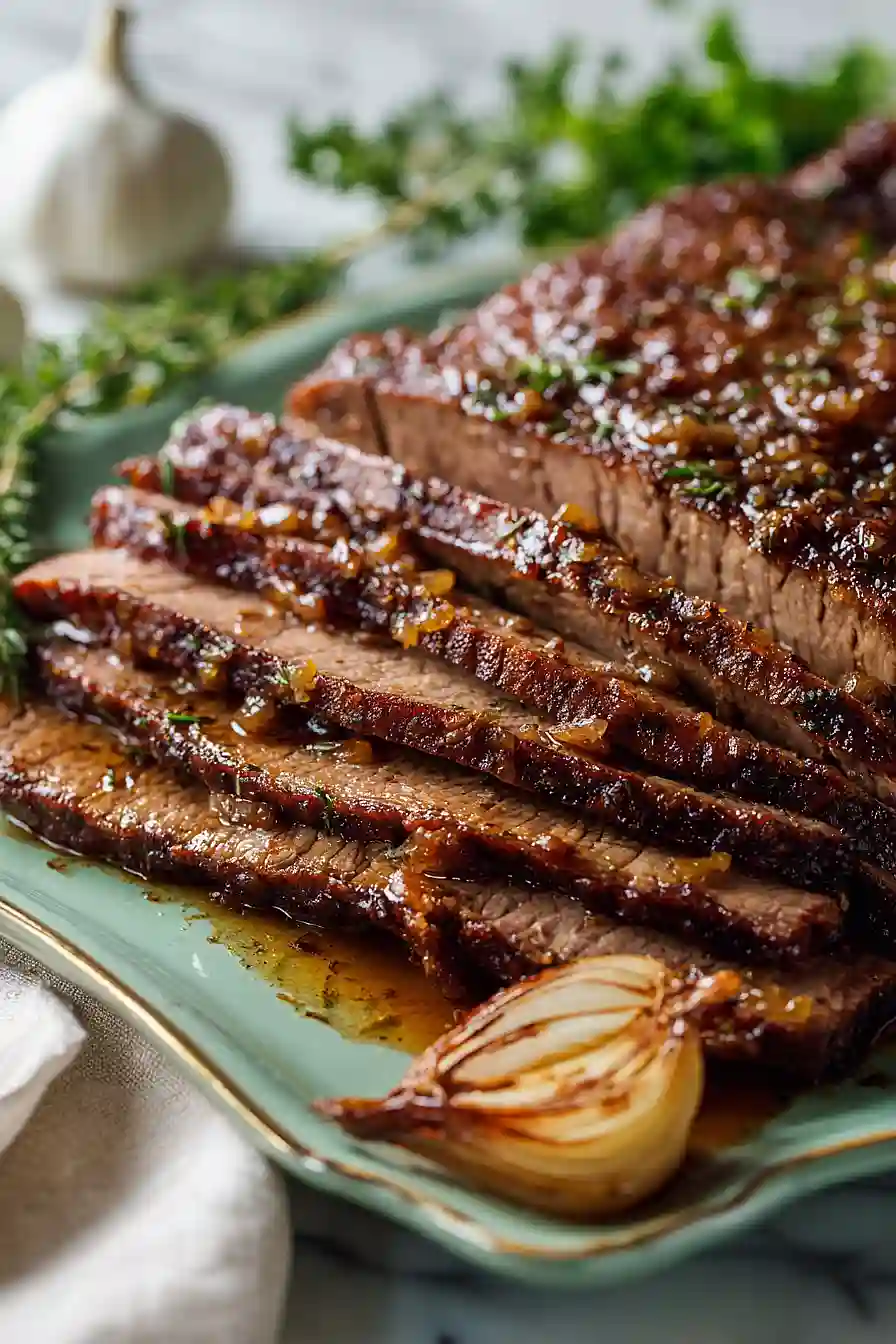
Why You’ll Love This Brisket
- Simple ingredients – This recipe uses basic pantry staples and fresh herbs you can find at any grocery store, making it easy to shop for and prepare.
- Impressive for company – The tender, flavorful brisket looks and tastes like you spent all day in the kitchen, but it’s actually pretty straightforward to make.
- Rich, savory flavor – The combination of garlic, thyme, and red wine creates a deep, satisfying taste that makes this brisket memorable.
- Perfect for meal prep – Brisket actually tastes better the next day, so you can make it ahead for gatherings or enjoy leftovers throughout the week.
What Kind of Brisket Should I Use?
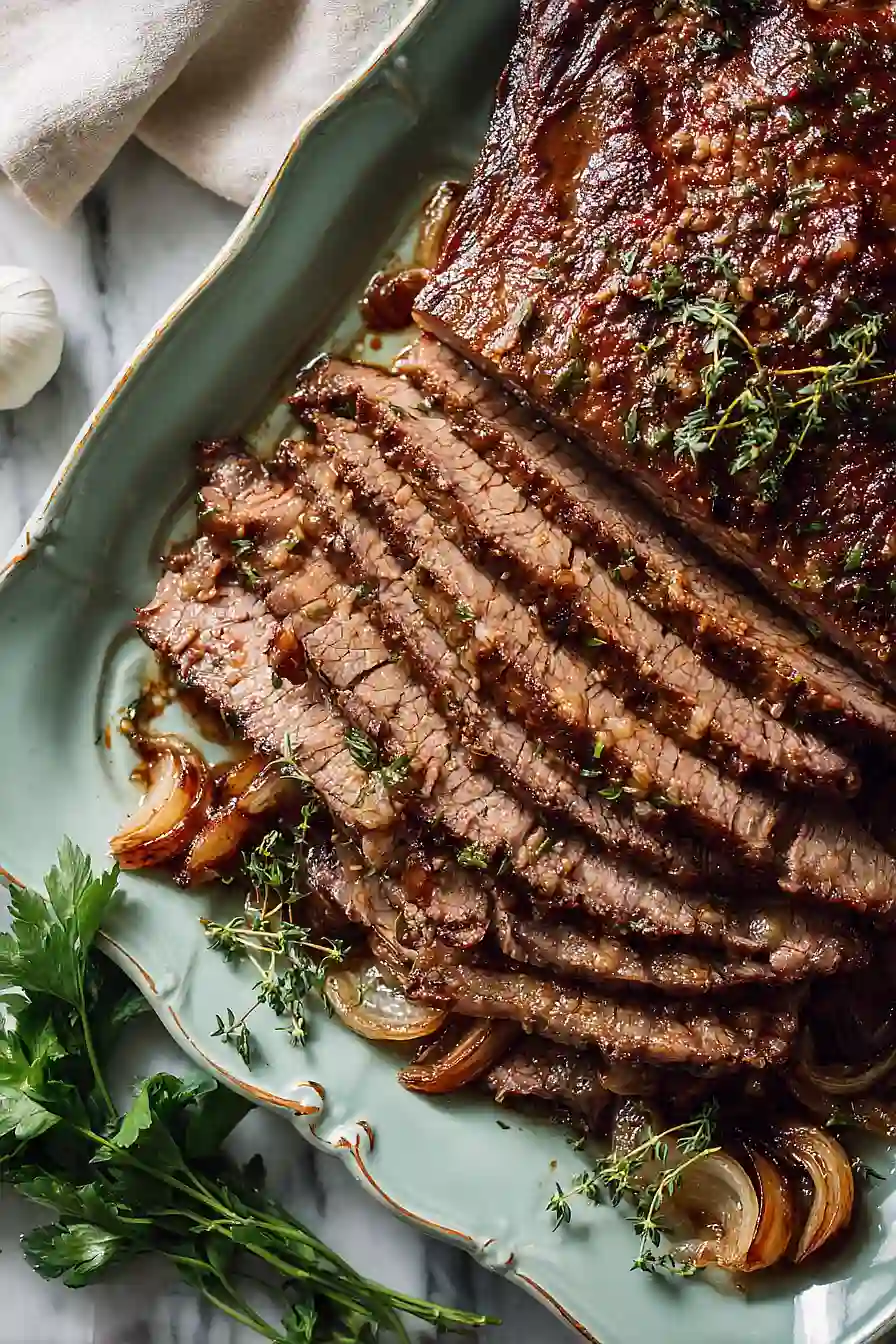
When shopping for brisket, you’ll typically find two cuts at the butcher counter: the flat cut and the point cut. The flat cut is leaner and slices more neatly, making it a popular choice for most home cooks, while the point cut has more marbling and fat, which means extra flavor but a bit less presentation appeal. Either cut will work great for this recipe since the long, slow cooking process breaks down the tough fibers and creates that melt-in-your-mouth texture we’re after. If you can, look for a brisket with a nice fat cap on one side – you’ll want to keep that on during cooking as it bastes the meat and keeps everything moist.
Options for Substitutions
This brisket recipe is pretty forgiving when it comes to swaps, so here are some options if you need them:
- Beef brisket: Brisket is really the star here and shouldn’t be substituted if you want authentic results. However, if you absolutely need an alternative, chuck roast can work – just reduce cooking time by about 30 minutes since it’s more tender.
- Fresh thyme: If you don’t have fresh thyme, use 1 tablespoon of dried thyme instead. Add it directly to the cooking liquid rather than as whole sprigs.
- Shallots: Can’t find shallots? Use 2 large yellow onions cut into wedges instead. They’ll give you a similar sweet, mild flavor.
- Red wine: Not a wine person? Substitute with 2 cups of beef broth plus 2 tablespoons of balsamic vinegar to get that tangy richness the wine provides.
- Crushed tomatoes: Diced tomatoes work fine here – just give them a rough mash with a spoon before adding. You could also use tomato sauce, though it’ll make the sauce slightly thinner.
- Fresh parsley: This is mainly for garnish, so you can skip it if needed or use fresh cilantro for a different flavor profile.
Watch Out for These Mistakes While Cooking
The biggest mistake when making brisket is skipping the browning step, which creates a flavorful crust and adds depth to your sauce – make sure your oil is hot enough that the meat sizzles when it hits the pan.
Another common error is cutting the brisket immediately after removing it from the oven, which causes all those delicious juices to run out onto your cutting board instead of staying in the meat where they belong.
Don’t forget to baste every 30 minutes as the recipe suggests, since this keeps the top of the brisket moist and helps build up that rich, concentrated flavor throughout the long cooking time.
When slicing, always cut against the grain (look for the direction of the muscle fibers and slice perpendicular to them) to ensure tender pieces rather than chewy, stringy meat.

What to Serve With Thyme and Garlic Brisket?
This rich, slow-cooked brisket pairs beautifully with creamy mashed potatoes or buttery egg noodles that can soak up all that incredible sauce. I love serving it alongside roasted root vegetables like carrots, parsnips, and potatoes that cook right in the same pan with the meat. A simple arugula salad with lemon vinaigrette helps cut through the richness of the brisket, or you can go with crusty bread to mop up every bit of the tomato and wine sauce. For a heartier meal, try it with polenta or even over a bed of creamy risotto.
Storage Instructions
Store: Brisket actually gets better after a day or two in the fridge! Let it cool completely, then store it in an airtight container with all those delicious juices for up to 4 days. The flavors really have time to meld together, making it even tastier the next day.
Freeze: This brisket freezes like a dream. Slice it up or leave it whole, then pack it in a freezer-safe container with the sauce and it’ll keep for up to 3 months. I like to portion it out so I can thaw just what I need for dinner.
Reheat: Warm the brisket gently in a covered dish in the oven at 300°F until heated through, about 20-30 minutes. You can also reheat it on the stovetop over low heat with a splash of beef broth or water to keep it moist.
| Preparation Time | 20-30 minutes |
| Cooking Time | 180-240 minutes |
| Total Time | 200-270 minutes |
| Level of Difficulty | Medium |
| Servings | 8 servings |
Estimated Nutrition
Estimated nutrition for the whole recipe (without optional ingredients):
- Calories: 3500-3900
- Protein: 260-290 g
- Fat: 210-230 g
- Carbohydrates: 60-80 g
Ingredients
For the garlic thyme paste:
- 8 garlic cloves (freshly minced)
- 3/4 tsp salt
- 10 sprigs thyme (leaves removed and finely chopped)
- 2 tbsp extra virgin olive oil
For the brisket:
- 4 lb brisket (trimmed but with a thin fat cap)
- 2 tbsp olive oil
- 1 1/2 tsp kosher salt
- 1 tsp freshly cracked black pepper
For the braise:
- 10 shallots (peeled and halved)
- 2 1/4 cups bold red wine (like Cabernet Sauvignon)
- 16 oz fire-roasted tomatoes
- 1 tbsp tomato paste (for extra richness)
- 1 tbsp balsamic vinegar (to balance acidity)
- 1 handful parsley
- 3 bay leaves
Step 1: Prepare the Herb Paste and Preheat
- 8 garlic cloves, minced
- 10 sprigs thyme, leaves removed and chopped
- 3/4 tsp salt
- 2 tbsp extra virgin olive oil
Preheat your oven to 325°F.
While it heats, mince the garlic cloves finely and remove the thyme leaves from their stems, chopping them finely as well.
In a small bowl, combine the minced garlic, thyme, and 3/4 teaspoon salt, then mash them together with the back of a spoon to create a paste.
Stir in 2 tablespoons of extra virgin olive oil until well combined.
This paste will be your flavor base for the brisket.
Step 2: Season and Sear the Brisket
- 4 lb brisket, trimmed
- 1 1/2 tsp kosher salt
- 1 tsp freshly cracked black pepper
- 2 tbsp olive oil
Pat the trimmed brisket dry with paper towels to ensure good browning.
Season all sides generously with 1 1/2 teaspoons kosher salt and 1 teaspoon freshly cracked black pepper.
Heat 2 tablespoons of olive oil in a large Dutch oven or heavy pot over medium-high heat until shimmering.
Once hot, carefully place the brisket in the pot and sear for 4-5 minutes per side until a deep golden-brown crust forms.
This browning develops crucial flavor through the Maillard reaction.
Step 3: Build the Braising Liquid
- herb paste from Step 1
- 10 shallots, peeled and halved
- 2 1/4 cups bold red wine
- 16 oz fire-roasted tomatoes
- 1 tbsp tomato paste
- 1 tbsp balsamic vinegar
- 1 handful parsley
- 3 bay leaves
Remove the seared brisket from the pot and set aside.
Add the halved shallots to the pot and sauté for 2-3 minutes until they begin to soften and release their sweetness.
Return the brisket to the pot and rub the herb paste from Step 1 all over the meat, working it into the crevices.
Pour in the red wine, scraping up any browned bits from the bottom of the pot—these concentrated flavors are essential.
Add the fire-roasted tomatoes, tomato paste, balsamic vinegar, bay leaves, and the handful of parsley.
I like to add the balsamic vinegar at this stage because it rounds out the acidity of the tomatoes and wine beautifully.
Step 4: Braise Low and Slow
- seared brisket from Step 2
- braising liquid from Step 3
Bring the braising liquid to a gentle simmer on the stovetop, then cover the pot and transfer it to the preheated 325°F oven.
Braise for 3 to 4 hours, basting the brisket with the braising liquid every 30 minutes.
This regular basting keeps the meat moist and allows the flavors to penetrate deeply.
The meat is done when it’s fork-tender and practically falls apart when probed—the fat cap should be tender, not chewy.
Step 5: Rest the Meat and Reduce the Sauce
- braised brisket
- braising liquid with shallots from Step 4
Remove the pot from the oven and transfer the brisket to a cutting board.
Let it rest for 15 minutes—this allows the muscle fibers to relax and retain their juices, keeping each slice tender and juicy.
While the meat rests, use a slotted spoon to transfer the softened shallots to a serving plate.
Place the pot over medium-high heat and bring the braising liquid to a boil.
Let it reduce for about 5 minutes, stirring occasionally, until the sauce is reduced by approximately half and thickens slightly.
This concentration intensifies the flavors and creates a luxurious, coating sauce.
Step 6: Slice, Plate, and Serve
- rested brisket from Step 5
- reserved shallots from Step 5
- reduced sauce from Step 5
Slice the rested brisket against the grain into 1/2-inch thick slices—slicing against the grain shortens the muscle fibers, making each bite more tender.
Arrange the slices on the plate with the reserved shallots, then ladle the reduced sauce generously over the top.
The sauce should pool slightly around the meat, coating each slice with the rich garlic, thyme, and wine flavors.
Garlic Herb Brisket
Ingredients
Method
- Preheat your oven to 325°F. While it heats, mince the garlic cloves finely and remove the thyme leaves from their stems, chopping them finely as well. In a small bowl, combine the minced garlic, thyme, and 3/4 teaspoon salt, then mash them together with the back of a spoon to create a paste. Stir in 2 tablespoons of extra virgin olive oil until well combined. This paste will be your flavor base for the brisket.
- Pat the trimmed brisket dry with paper towels to ensure good browning. Season all sides generously with 1 1/2 teaspoons kosher salt and 1 teaspoon freshly cracked black pepper. Heat 2 tablespoons of olive oil in a large Dutch oven or heavy pot over medium-high heat until shimmering. Once hot, carefully place the brisket in the pot and sear for 4-5 minutes per side until a deep golden-brown crust forms. This browning develops crucial flavor through the Maillard reaction.
- Remove the seared brisket from the pot and set aside. Add the halved shallots to the pot and sauté for 2-3 minutes until they begin to soften and release their sweetness. Return the brisket to the pot and rub the herb paste from Step 1 all over the meat, working it into the crevices. Pour in the red wine, scraping up any browned bits from the bottom of the pot—these concentrated flavors are essential. Add the fire-roasted tomatoes, tomato paste, balsamic vinegar, bay leaves, and the handful of parsley. I like to add the balsamic vinegar at this stage because it rounds out the acidity of the tomatoes and wine beautifully.
- Bring the braising liquid to a gentle simmer on the stovetop, then cover the pot and transfer it to the preheated 325°F oven. Braise for 3 to 4 hours, basting the brisket with the braising liquid every 30 minutes. This regular basting keeps the meat moist and allows the flavors to penetrate deeply. The meat is done when it's fork-tender and practically falls apart when probed—the fat cap should be tender, not chewy.
- Remove the pot from the oven and transfer the brisket to a cutting board. Let it rest for 15 minutes—this allows the muscle fibers to relax and retain their juices, keeping each slice tender and juicy. While the meat rests, use a slotted spoon to transfer the softened shallots to a serving plate. Place the pot over medium-high heat and bring the braising liquid to a boil. Let it reduce for about 5 minutes, stirring occasionally, until the sauce is reduced by approximately half and thickens slightly. This concentration intensifies the flavors and creates a luxurious, coating sauce.
- Slice the rested brisket against the grain into 1/2-inch thick slices—slicing against the grain shortens the muscle fibers, making each bite more tender. Arrange the slices on the plate with the reserved shallots, then ladle the reduced sauce generously over the top. The sauce should pool slightly around the meat, coating each slice with the rich garlic, thyme, and wine flavors.