Here is my favorite Texas style smoked beef brisket recipe, with a simple salt and pepper rub, a touch of garlic and onion powder, and low and slow smoking until you get that perfect bark on the outside.
This smoked brisket is what I make when we’re having a big backyard gathering. It takes time and patience, but once you smell that smoke and see everyone’s faces when you slice into it, you’ll know it was worth every hour. Plus, the leftovers make amazing sandwiches the next day!
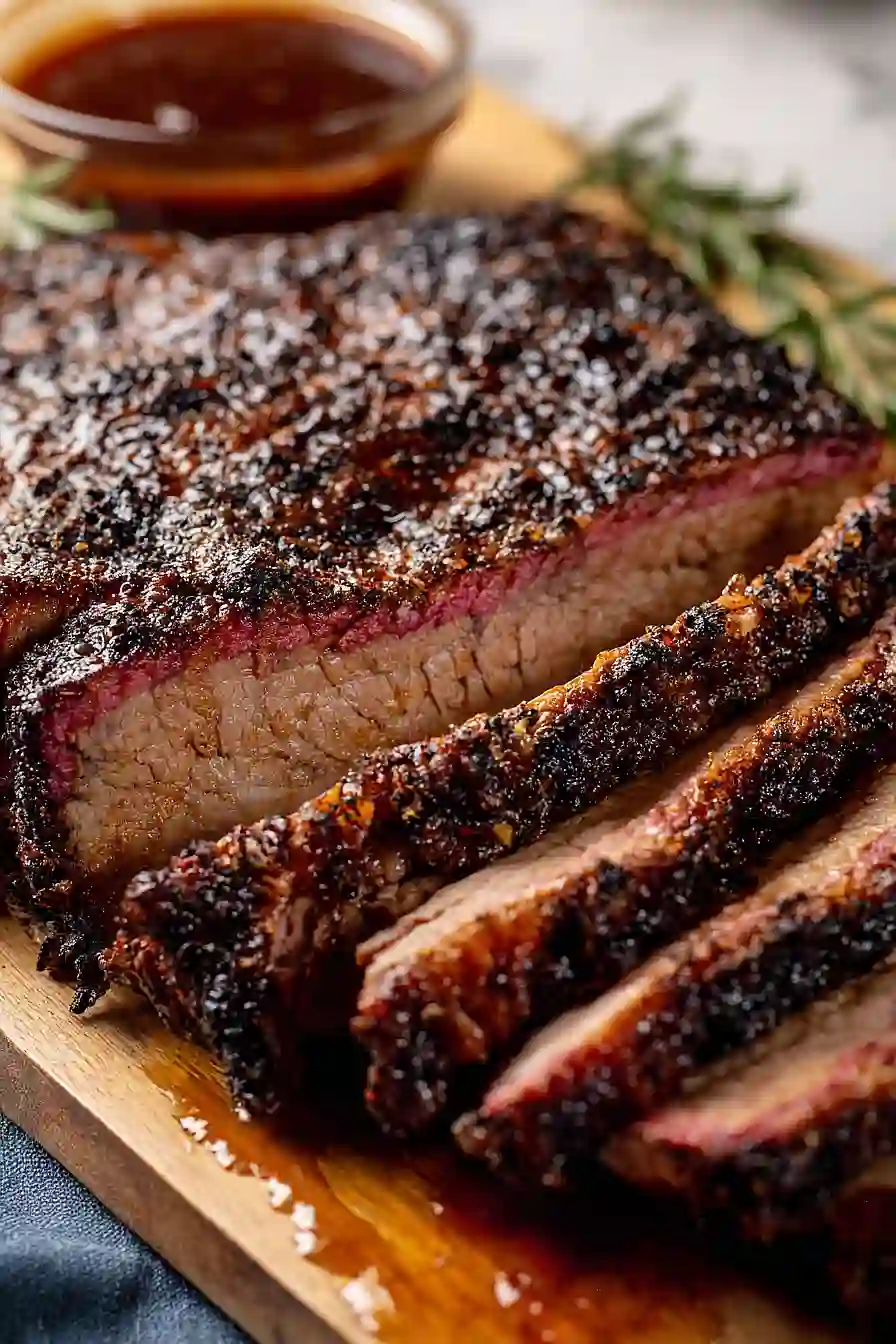
Why You’ll Love This Texas Style Smoked Beef Brisket
- Simple seasoning – You only need three basic ingredients for the rub – salt, pepper, and optional garlic powder. No fancy spice blends required, just classic Texas-style flavor.
- Impressive for gatherings – This brisket is perfect for feeding a crowd at barbecues, holidays, or game day parties. One brisket goes a long way and always gets rave reviews.
- Authentic barbecue experience – Smoking your own brisket at home gives you that real Texas barbecue taste without having to travel or wait in line at a restaurant.
- Worth the wait – While it takes time to smoke, the process is mostly hands-off, and the melt-in-your-mouth tender result is absolutely worth it.
What Kind of Brisket Should I Use?
For authentic Texas-style smoked brisket, you’ll want to get a whole packer brisket, which includes both the flat and the point sections. This cut gives you the best of both worlds – the leaner flat and the fattier, more marbled point that stays super juicy during the long smoke. You can find whole packer briskets at most butcher shops or warehouse stores like Costco, and they typically weigh between 12-14 pounds. Make sure to look for a brisket with good marbling throughout and a nice thick fat cap on one side, as that fat will help keep everything moist during those long hours in the smoker.
Options for Substitutions
When it comes to Texas-style brisket, there’s not much wiggle room, but here are a few things to keep in mind:
- Whole packer brisket: This is one ingredient you really shouldn’t substitute. A whole packer brisket includes both the flat and point, which is what makes Texas-style brisket what it is. If you can only find a flat, it’ll work but won’t have quite the same richness.
- Coarse Kosher salt: Stick with coarse Kosher salt if possible – table salt is much finer and will make your brisket too salty. If you only have table salt, use about half the amount called for.
- Coarse black pepper: Freshly cracked coarse black pepper is key here. Pre-ground pepper is too fine and won’t give you that classic bark texture. Crack whole peppercorns in a grinder or spice mill for best results.
- Garlic powder: This one’s truly optional in traditional Texas brisket. Some pitmasters swear by just salt and pepper, so feel free to leave it out if you want to keep things classic. Never use fresh garlic – it’ll burn during the long smoke.
Watch Out for These Mistakes While Smoking
The biggest mistake people make with brisket is pulling it off the smoker too early – even when your thermometer hits 202°F, the meat needs to feel like butter when you probe it, not tight or resistant, which means it needs more time.
Another common error is trimming the fat cap too thin or removing it completely, so aim for a solid 1/4 inch layer that will render down and keep your brisket moist during the long cook.
Don’t skip the resting period after smoking, as cutting into the brisket right away causes all those delicious juices to run out onto your cutting board instead of staying in the meat.
Finally, slicing with the grain instead of against it will give you tough, chewy pieces no matter how perfectly you cooked it, so take a moment to identify which direction the muscle fibers run before you start cutting.
What to Serve With Smoked Brisket?
Smoked brisket is the star of any backyard barbecue, so I like to keep the sides simple and classic. My go-to lineup includes creamy coleslaw, baked beans, and some soft potato rolls or Texas toast for making brisket sandwiches. Mac and cheese is always a crowd-pleaser, and don’t forget the pickles and sliced onions on the side – they cut through the richness of the meat perfectly. For a lighter option, a crisp cucumber salad or grilled corn on the cob rounds out the plate nicely.
Storage Instructions
Store: Once your brisket has cooled down, wrap it tightly in plastic wrap or aluminum foil and keep it in the fridge for up to 4 days. I actually think brisket tastes even better the next day after all those smoky flavors have had time to settle in.
Freeze: Brisket freezes really well, which is great since you’re dealing with such a big piece of meat. Wrap it tightly in plastic wrap, then again in foil, and it’ll keep in the freezer for up to 3 months. I like to slice it first so I can grab just what I need.
Warm Up: The best way to reheat brisket is low and slow, just like you cooked it. Wrap it in foil with a splash of beef broth to keep it moist, and warm it in a 250°F oven until heated through. You can also slice it cold for sandwiches, which is honestly one of my favorite ways to enjoy leftovers.
| Preparation Time | 30-45 minutes |
| Cooking Time | 780-960 minutes |
| Total Time | 810-1005 minutes |
| Level of Difficulty | Medium |
| Servings | 20 servings |
Estimated Nutrition
Estimated nutrition for the whole recipe (without optional ingredients):
- Calories: 8000-9000
- Protein: 800-950 g
- Fat: 600-750 g
- Carbohydrates: 0-2 g
Ingredients
For the brisket:
- 14 lb brisket (I only use Creekstone Farms Master Chef Choice)
- 2 tablespoons yellow mustard (used as a binder before seasoning)
For the dry rub:
- 3 tablespoons salt (Diamond Crystal kosher salt is preferred for even coverage)
- 3 tablespoons pepper (coarse-ground 16 mesh for the classic Texas bark)
- 2 tablespoons garlic powder
- 1 tablespoon onion powder
Step 1: Prepare and Season the Brisket
- 14 lb brisket
- 2 tablespoons yellow mustard
- 3 tablespoons salt
- 3 tablespoons pepper
- 2 tablespoons garlic powder
- 1 tablespoon onion powder
Remove the brisket from the cooler 30 minutes before trimming to make it easier to work with.
Trim the fat cap to an even 1/4 inch thickness across the entire surface, removing any hard fat or skin—this allows smoke to penetrate better and creates that coveted bark.
Pat the meat completely dry with paper towels.
Apply the yellow mustard as a thin, even binder across all sides of the brisket; this helps the dry rub stick to the meat and adds subtle complexity to the bark.
In a small bowl, combine the salt, pepper, garlic powder, and onion powder.
Generously apply the dry rub mixture to all sides of the meat, pressing gently so it adheres to the mustard layer.
I like to pay special attention to the edges and crevices where the spice can concentrate for extra flavor.
Step 2: Smoke Until the Stall (Low and Slow Phase)
- seasoned brisket from Step 1
Heat your smoker to 225°F using your preferred wood (oak, hickory, or mesquite all work beautifully for Texas-style brisket).
Once the smoker is stabilized at temperature, place the seasoned brisket fat-side up on the grate and maintain a steady 225°F throughout.
Smoke the meat undisturbed for approximately 8 hours, or until the internal temperature reaches 165°F when measured in the thickest part of the flat.
This low, slow phase builds the pink smoke ring and develops that classic Texas bark.
I find that maintaining consistent temperature is more important than exact timing—every smoker is different, so rely on your thermometer rather than the clock.
Step 3: Wrap and Power Through the Stall (Hot Phase)
- partially smoked brisket from Step 2
Once the brisket reaches 165°F internal temperature, remove it from the smoker and wrap it tightly in butcher paper or aluminum foil.
This wrapping traps moisture and heat, allowing the meat to power through the stall—the plateau where the temperature rises slowly—without drying out or losing bark quality.
Return the wrapped brisket to the smoker at 225°F and continue cooking until the internal temperature reaches 202°F in the thickest part of the flat, which typically takes another 5-8 hours depending on the brisket’s size and your smoker’s consistency.
The meat should probe tender (like inserting a toothpick into butter) when fully done.
Step 4: Rest and Slice
- fully smoked brisket from Step 3
Remove the brisket from the smoker and let it rest, still wrapped, for at least 1 hour in a warm place or wrapped in towels in a cooler.
This resting period allows the juices to redistribute throughout the meat, ensuring tender, juicy slices instead of dry cuts.
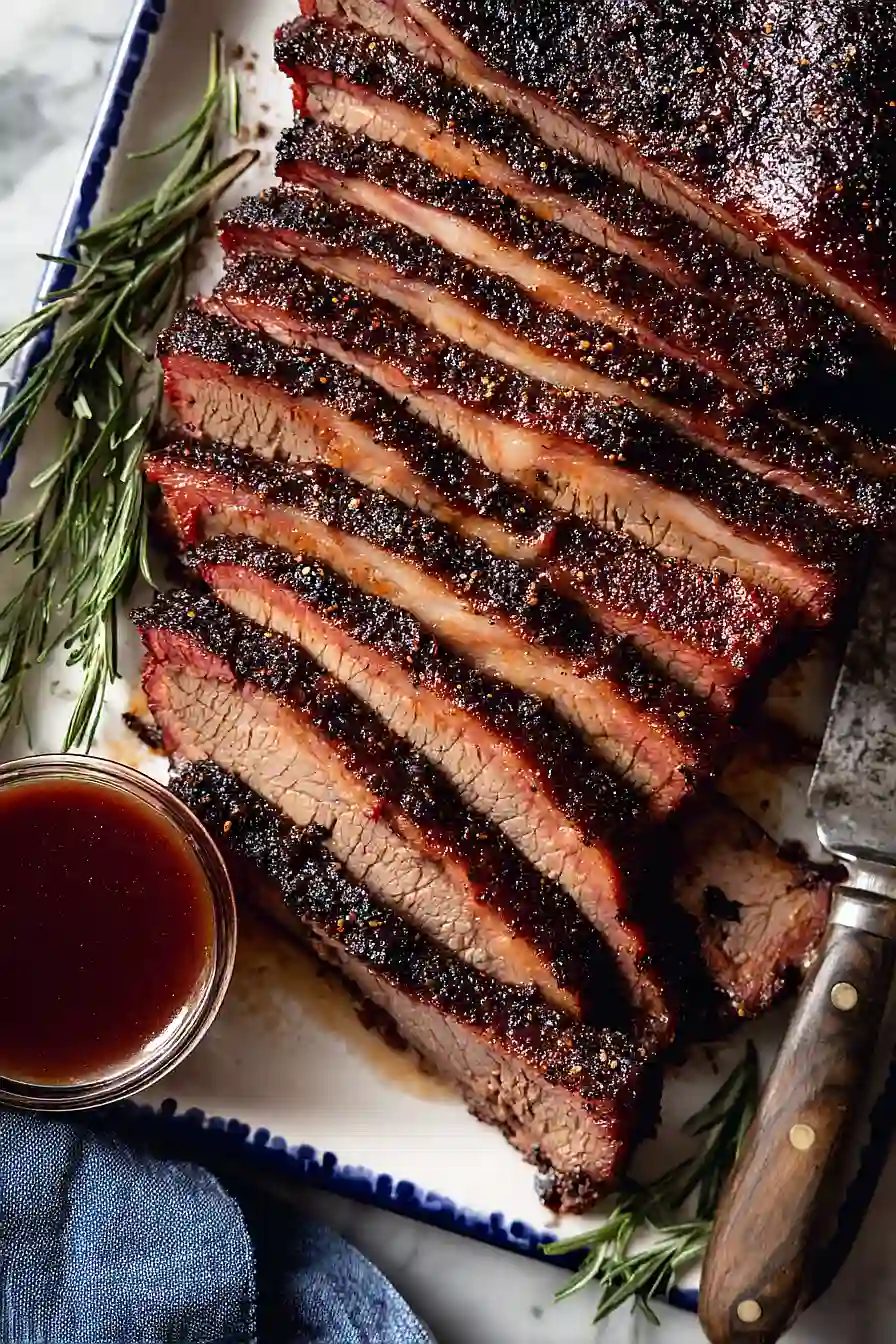
Once rested, unwrap the brisket and slice against the grain using a sharp knife, cutting 1/4-inch thick slices.
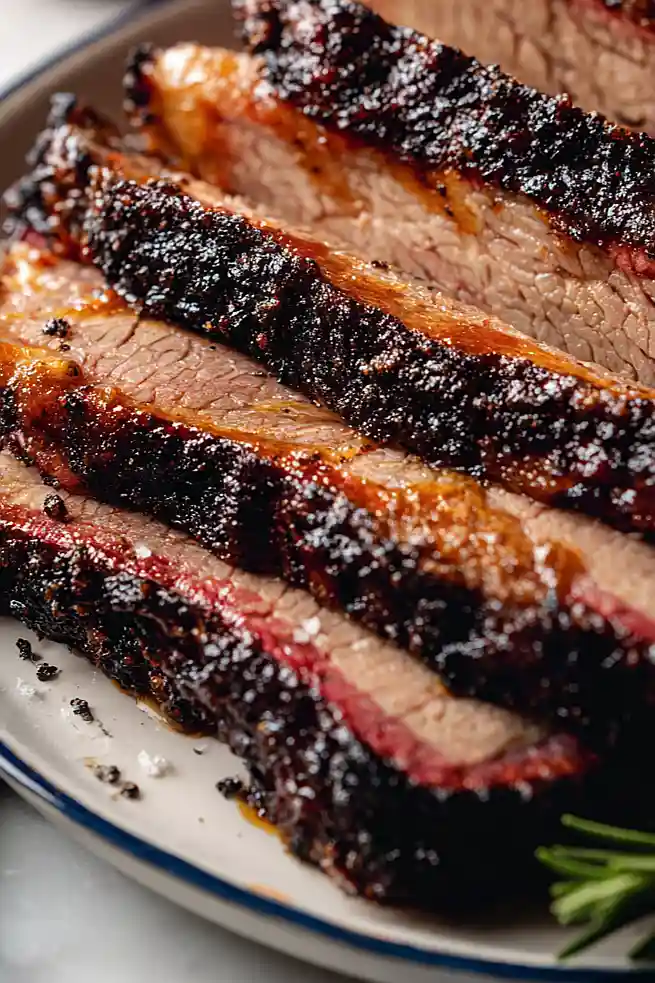
Serve immediately while still warm, and enjoy the combination of the smoky bark and tender, pink-hued interior you’ve worked so hard to achieve.
Simple Texas Style Smoked Beef Brisket
Ingredients
Method
- Remove the brisket from the cooler 30 minutes before trimming to make it easier to work with. Trim the fat cap to an even 1/4 inch thickness across the entire surface, removing any hard fat or skin—this allows smoke to penetrate better and creates that coveted bark. Pat the meat completely dry with paper towels. Apply the yellow mustard as a thin, even binder across all sides of the brisket; this helps the dry rub stick to the meat and adds subtle complexity to the bark. In a small bowl, combine the salt, pepper, garlic powder, and onion powder. Generously apply the dry rub mixture to all sides of the meat, pressing gently so it adheres to the mustard layer. I like to pay special attention to the edges and crevices where the spice can concentrate for extra flavor.
- Heat your smoker to 225°F using your preferred wood (oak, hickory, or mesquite all work beautifully for Texas-style brisket). Once the smoker is stabilized at temperature, place the seasoned brisket fat-side up on the grate and maintain a steady 225°F throughout. Smoke the meat undisturbed for approximately 8 hours, or until the internal temperature reaches 165°F when measured in the thickest part of the flat. This low, slow phase builds the pink smoke ring and develops that classic Texas bark. I find that maintaining consistent temperature is more important than exact timing—every smoker is different, so rely on your thermometer rather than the clock.
- Once the brisket reaches 165°F internal temperature, remove it from the smoker and wrap it tightly in butcher paper or aluminum foil. This wrapping traps moisture and heat, allowing the meat to power through the stall—the plateau where the temperature rises slowly—without drying out or losing bark quality. Return the wrapped brisket to the smoker at 225°F and continue cooking until the internal temperature reaches 202°F in the thickest part of the flat, which typically takes another 5-8 hours depending on the brisket's size and your smoker's consistency. The meat should probe tender (like inserting a toothpick into butter) when fully done.
- Remove the brisket from the smoker and let it rest, still wrapped, for at least 1 hour in a warm place or wrapped in towels in a cooler. This resting period allows the juices to redistribute throughout the meat, ensuring tender, juicy slices instead of dry cuts. Once rested, unwrap the brisket and slice against the grain using a sharp knife, cutting 1/4-inch thick slices. Serve immediately while still warm, and enjoy the combination of the smoky bark and tender, pink-hued interior you've worked so hard to achieve.