Place a large pot of water over high heat to boil—you'll need about 4-6 quarts. While the water heats, toast the black pepper in a dry skillet over medium heat for 1-2 minutes, stirring constantly until fragrant. This step blooms the pepper's flavor and prevents it from tasting harsh or raw in the final dish. Transfer the toasted pepper to a small bowl and set aside. I like to toast my pepper ahead of time because it transforms the entire dish—the difference between flat and vibrant is remarkable.
Once the water is boiling vigorously, add a generous pinch of salt and then the bucatini. Stir immediately to prevent sticking, and cook for 6-8 minutes until the pasta is just shy of al dente—it should still have a slight firmness. About 1 minute before the pasta finishes, reserve 2/3 cup of the starchy pasta water in a separate bowl or measuring cup. This starchy liquid is essential for creating the creamy sauce, so don't skip this step.
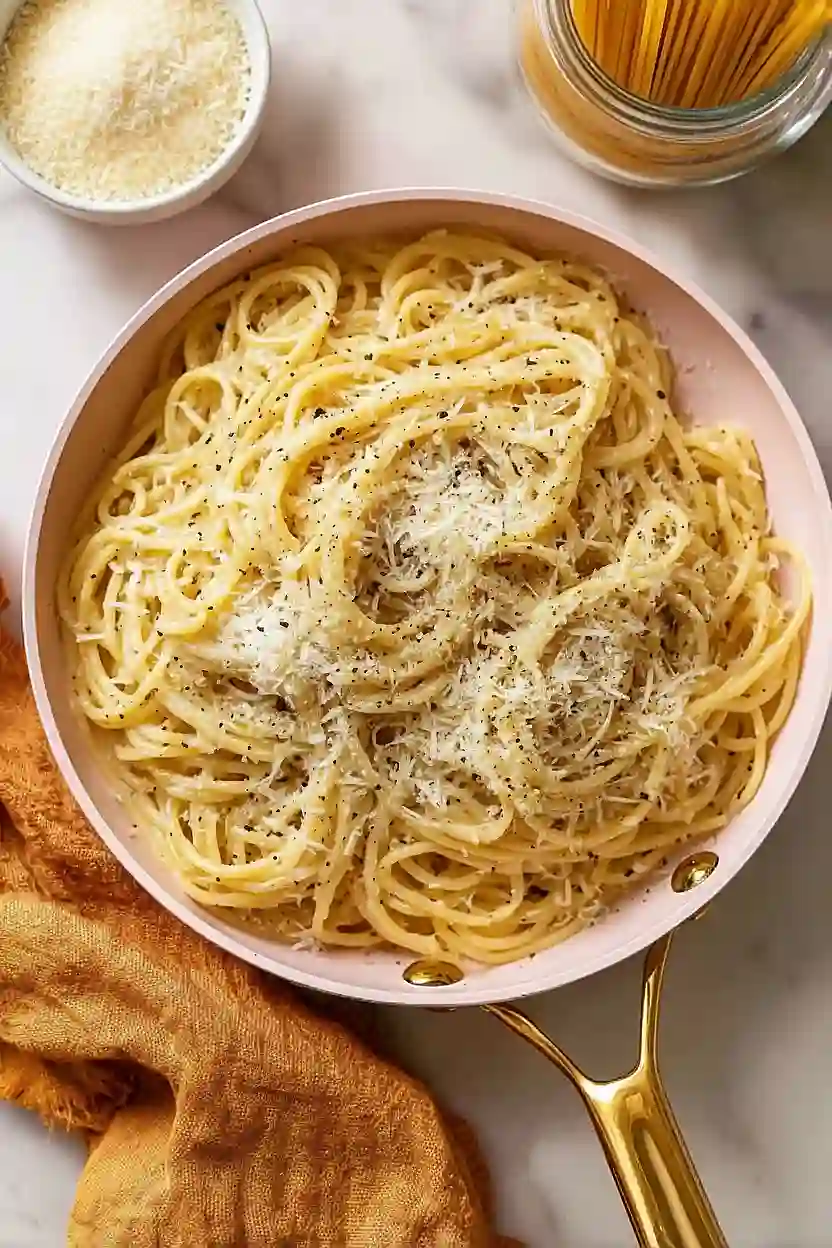
Drain the pasta thoroughly and immediately transfer it to a large skillet or wide pan set over low heat. Add the butter and stir constantly for about 30 seconds until melted and coating the pasta. Pour in about half of the reserved pasta water (roughly 1/3 cup) and continue stirring to create a creamy emulsion. Once combined, remove the pan from the heat and add the grated pecorino romano and toasted black pepper from Step 1, stirring vigorously for 1-2 minutes. The residual heat and starch from the pasta water will help bind everything into a silky, cohesive sauce—the key to real cacio e pepe is constant stirring and low heat. If the sauce seems too thick, add the remaining pasta water a tablespoon at a time until you reach a luxurious, creamy consistency. I find that finishing the sauce off-heat prevents the cheese from becoming grainy or breaking.
Divide the creamy pasta between serving bowls immediately while it's hot. Top each portion with an extra generous grating of pecorino romano and a few cracks of fresh black pepper.