If you ask me, cacio e pepe is proof that you don’t need a long ingredient list to make something really good.
This classic Roman pasta dish comes together with just five simple ingredients and takes less than 20 minutes to make. Buttery bucatini gets tossed with sharp pecorino romano and cracked black pepper that’s cooked until it’s fragrant and toasty.
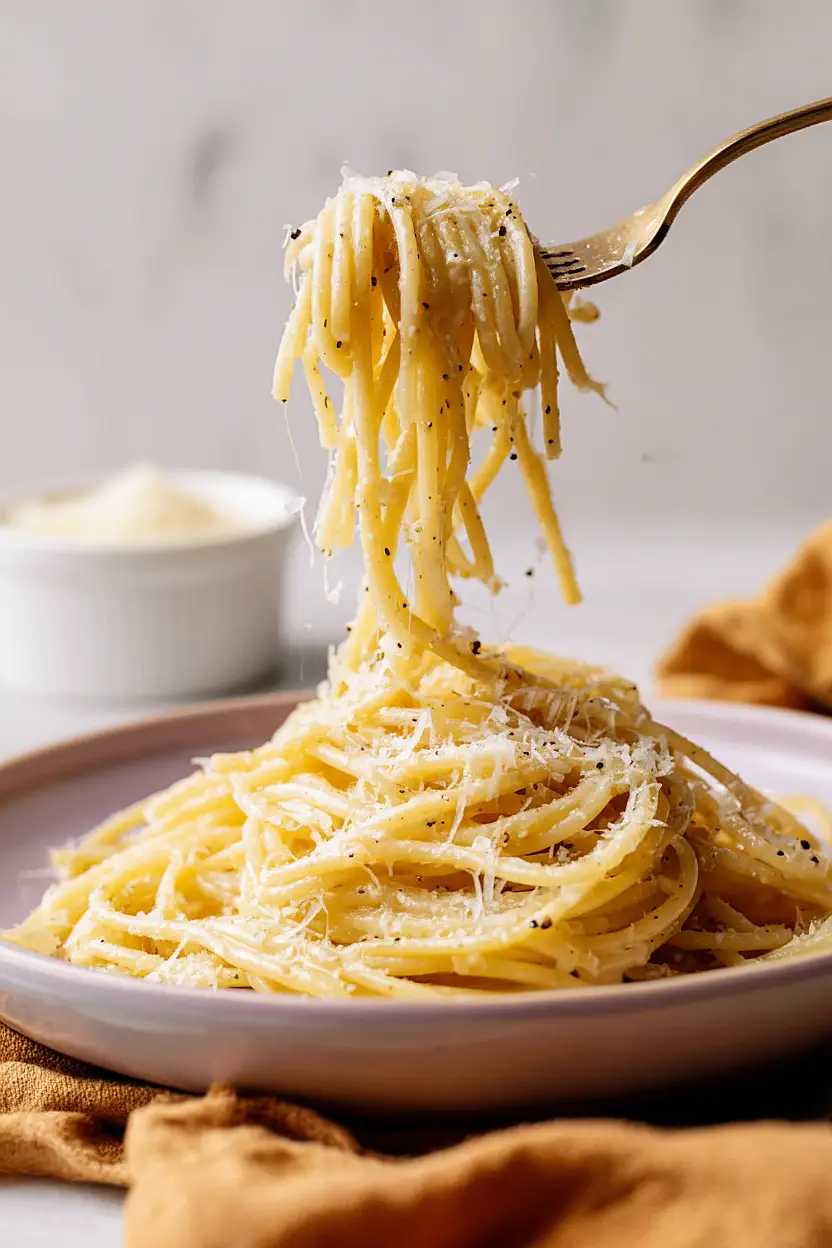
The trick is using starchy pasta water to create a creamy sauce that coats every strand. No cream needed – just cheese, butter, and a little technique make the magic happen.
It’s comfort food that feels fancy but won’t stress you out on a busy weeknight.
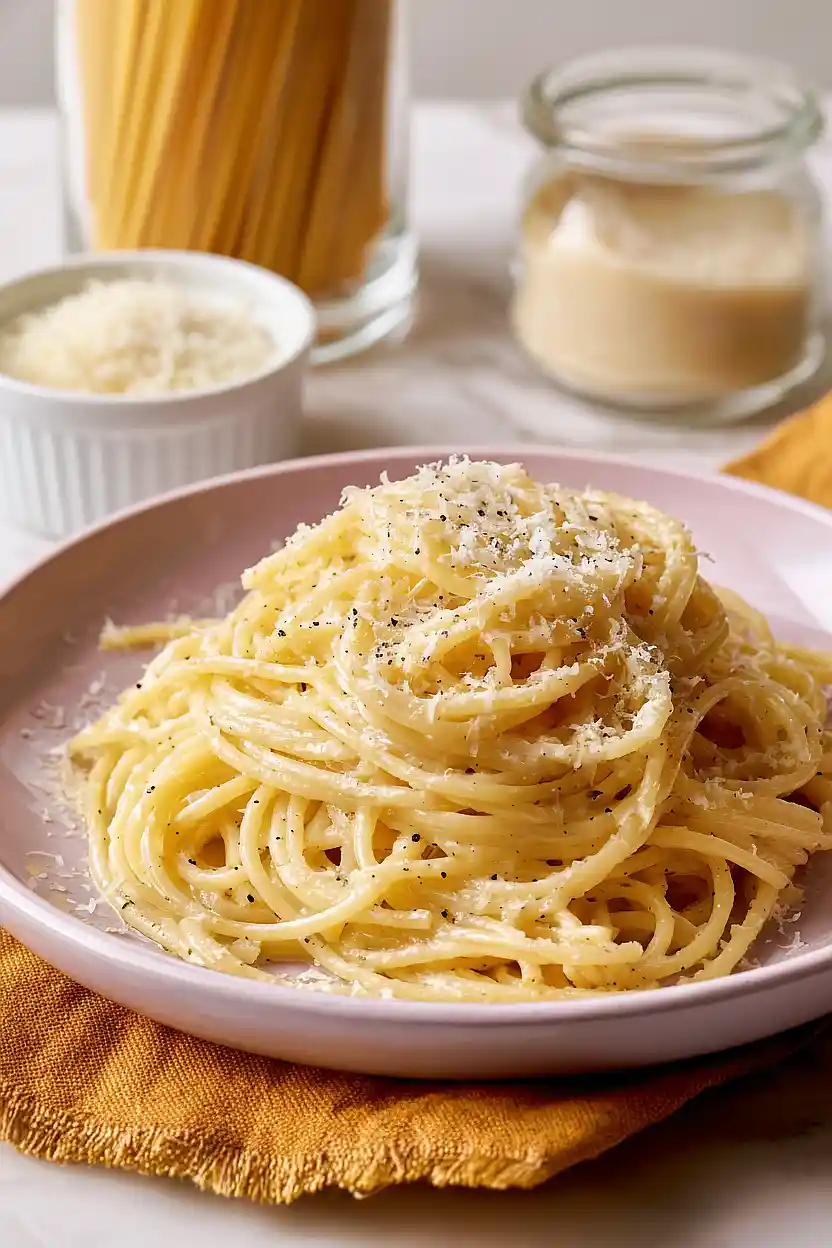
Why You’ll Love This Cacio e Pepe
- Ready in under 20 minutes – This classic Italian pasta comes together faster than ordering takeout, making it perfect for busy weeknights when you need dinner on the table fast.
- Just 4 simple ingredients – You only need bucatini, butter, Pecorino Romano, and black pepper to create this restaurant-quality dish at home.
- Minimal cleanup – With just one pot for the pasta and a simple mixing process, you’ll spend more time enjoying your meal than washing dishes.
- Impressive yet easy – This traditional Roman recipe looks and tastes like something from a fancy Italian restaurant, but it’s surprisingly simple to master with a little practice.
What Kind of Pecorino Romano Should I Use?
For authentic cacio e pepe, you’ll want to use real Pecorino Romano cheese, not the pre-grated stuff in the green can. Look for a wedge of imported Pecorino Romano in the specialty cheese section of your grocery store – it should say “Pecorino Romano DOP” on the label, which means it’s the real deal from Italy. The cheese should be firm and have a sharp, salty flavor that’s a bit tangy. When you get it home, grate it yourself using a fine grater or microplane right before you make the dish, since freshly grated cheese melts much better and creates that creamy sauce cacio e pepe is known for.
Options for Substitutions
While cacio e pepe is a simple recipe with just a few key ingredients, here’s what you can swap if needed:
- Bucatini: Spaghetti, tonnarelli, or linguine all work great here. The pasta shape isn’t critical, but stick with long noodles for the best experience.
- Pecorino Romano: This is the star of the show, so I’d recommend not substituting it if possible. However, if you absolutely can’t find it, Parmigiano-Reggiano will work – just know the flavor will be milder and less tangy.
- Black pepper: Freshly cracked black pepper is really important for this dish since it’s one of the main flavors. Pre-ground pepper won’t give you the same punch, so try to use whole peppercorns and crack them yourself.
- Butter: You can use olive oil instead, though butter adds a nice richness. If using oil, go with about 3 tablespoons to get a similar creamy texture.
Watch Out for These Mistakes While Cooking
The biggest mistake people make with cacio e pepe is adding the cheese to a pan that’s too hot, which causes it to clump and turn grainy instead of creating that smooth, creamy sauce you’re after – always remove the pan from direct heat before stirring in the Pecorino Romano.
Another common error is not using enough pasta water, so make sure you reserve at least 2/3 cup (or even a bit more) since the starchy water is what helps emulsify the cheese and butter into a silky sauce.
To get the best results, add the cheese gradually while tossing constantly, and if your sauce looks too thick or starts to seize up, don’t panic – just add a splash more pasta water and keep stirring until it comes together.
What to Serve With Cacio e Pepe?
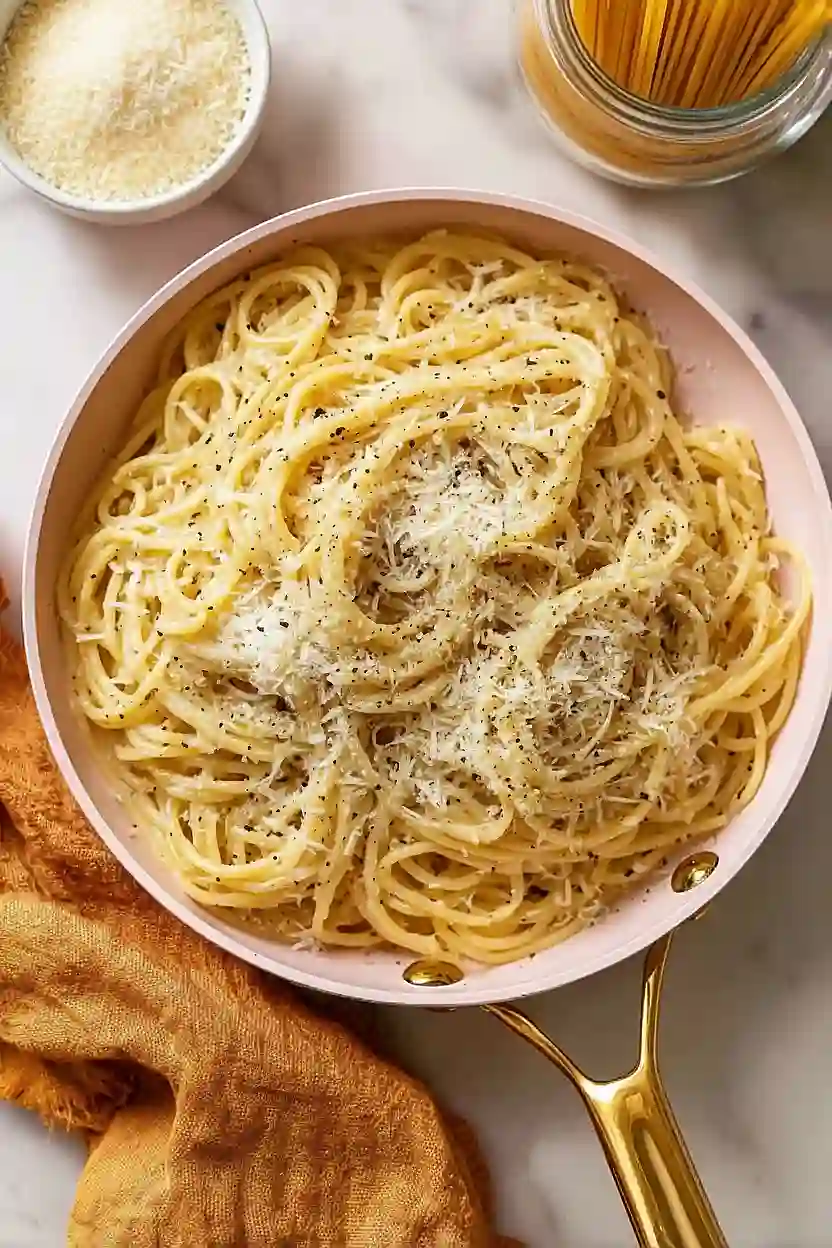
Since cacio e pepe is such a rich and cheesy pasta, I like to balance it out with something fresh and light on the side. A simple arugula salad with lemon juice and olive oil cuts through all that creamy goodness perfectly. You could also go with some roasted vegetables like broccoli or asparagus, which add a nice contrast to the buttery pasta. If you want to keep things really simple, just grab some crusty bread to mop up any extra sauce left in your bowl.
Storage Instructions
Store: Cacio e pepe is really best enjoyed right away, but if you have leftovers, store them in an airtight container in the fridge for up to 2 days. The sauce tends to get a bit thick and clumpy as it cools, so don’t expect it to be quite the same as when it’s fresh.
Reheat: To bring your leftovers back to life, add a splash of pasta water or regular water to a pan over low heat. Toss the pasta gently while it warms up, adding more water as needed to loosen the sauce. You can also microwave it with a bit of water, stirring every 30 seconds until heated through.
| Preparation Time | 5-10 minutes |
| Cooking Time | 5-10 minutes |
| Total Time | 10-20 minutes |
| Level of Difficulty | Easy |
| Servings | 2 servings |
Estimated Nutrition
Estimated nutrition for the whole recipe (without optional ingredients):
- Calories: 900-1050
- Protein: 27-32 g
- Fat: 30-38 g
- Carbohydrates: 125-140 g
Ingredients
- 8 oz bucatini
- 3 tbsp butter
- 0.75 cup pecorino romano
- 0.75 tsp black pepper
- Pinch of salt for seasoning
Step 1: Toast the Black Pepper and Start the Pasta Water
- 0.75 tsp black pepper
Place a large pot of water over high heat to boil—you’ll need about 4-6 quarts.
While the water heats, toast the black pepper in a dry skillet over medium heat for 1-2 minutes, stirring constantly until fragrant.
This step blooms the pepper’s flavor and prevents it from tasting harsh or raw in the final dish.
Transfer the toasted pepper to a small bowl and set aside.
I like to toast my pepper ahead of time because it transforms the entire dish—the difference between flat and vibrant is remarkable.
Step 2: Cook the Pasta
- 8 oz bucatini
- Pinch of salt for seasoning
Once the water is boiling vigorously, add a generous pinch of salt and then the bucatini.
Stir immediately to prevent sticking, and cook for 6-8 minutes until the pasta is just shy of al dente—it should still have a slight firmness.
About 1 minute before the pasta finishes, reserve 2/3 cup of the starchy pasta water in a separate bowl or measuring cup.
This starchy liquid is essential for creating the creamy sauce, so don’t skip this step.
Step 3: Emulsify the Butter, Cheese, and Pepper into a Creamy Sauce
- 3 tbsp butter
- 0.75 cup pecorino romano
- toasted black pepper from Step 1
- reserved pasta water from Step 2
Drain the pasta thoroughly and immediately transfer it to a large skillet or wide pan set over low heat.
Add the butter and stir constantly for about 30 seconds until melted and coating the pasta.
Pour in about half of the reserved pasta water (roughly 1/3 cup) and continue stirring to create a creamy emulsion.
Once combined, remove the pan from the heat and add the grated pecorino romano and toasted black pepper from Step 1, stirring vigorously for 1-2 minutes.
The residual heat and starch from the pasta water will help bind everything into a silky, cohesive sauce—the key to real cacio e pepe is constant stirring and low heat.
If the sauce seems too thick, add the remaining pasta water a tablespoon at a time until you reach a luxurious, creamy consistency.
I find that finishing the sauce off-heat prevents the cheese from becoming grainy or breaking.
Step 4: Plate and Finish
- Extra pecorino romano for garnish
Divide the creamy pasta between serving bowls immediately while it’s hot.
Top each portion with an extra generous grating of pecorino romano and a few cracks of fresh black pepper.
Traditional Cacio e Pepe
Ingredients
Method
- Place a large pot of water over high heat to boil—you'll need about 4-6 quarts. While the water heats, toast the black pepper in a dry skillet over medium heat for 1-2 minutes, stirring constantly until fragrant. This step blooms the pepper's flavor and prevents it from tasting harsh or raw in the final dish. Transfer the toasted pepper to a small bowl and set aside. I like to toast my pepper ahead of time because it transforms the entire dish—the difference between flat and vibrant is remarkable.
- Once the water is boiling vigorously, add a generous pinch of salt and then the bucatini. Stir immediately to prevent sticking, and cook for 6-8 minutes until the pasta is just shy of al dente—it should still have a slight firmness. About 1 minute before the pasta finishes, reserve 2/3 cup of the starchy pasta water in a separate bowl or measuring cup. This starchy liquid is essential for creating the creamy sauce, so don't skip this step.
- Drain the pasta thoroughly and immediately transfer it to a large skillet or wide pan set over low heat. Add the butter and stir constantly for about 30 seconds until melted and coating the pasta. Pour in about half of the reserved pasta water (roughly 1/3 cup) and continue stirring to create a creamy emulsion. Once combined, remove the pan from the heat and add the grated pecorino romano and toasted black pepper from Step 1, stirring vigorously for 1-2 minutes. The residual heat and starch from the pasta water will help bind everything into a silky, cohesive sauce—the key to real cacio e pepe is constant stirring and low heat. If the sauce seems too thick, add the remaining pasta water a tablespoon at a time until you reach a luxurious, creamy consistency. I find that finishing the sauce off-heat prevents the cheese from becoming grainy or breaking.
- Divide the creamy pasta between serving bowls immediately while it's hot. Top each portion with an extra generous grating of pecorino romano and a few cracks of fresh black pepper.