Brunch at home doesn’t have to mean settling for scrambled eggs or plain toast. Sure, eggs benedict sounds fancy and intimidating—the kind of thing you’d order at a nice restaurant but never attempt in your own kitchen. But here’s the thing: it’s actually way easier than you think, especially when you swap out the traditional Canadian bacon for fresh asparagus.
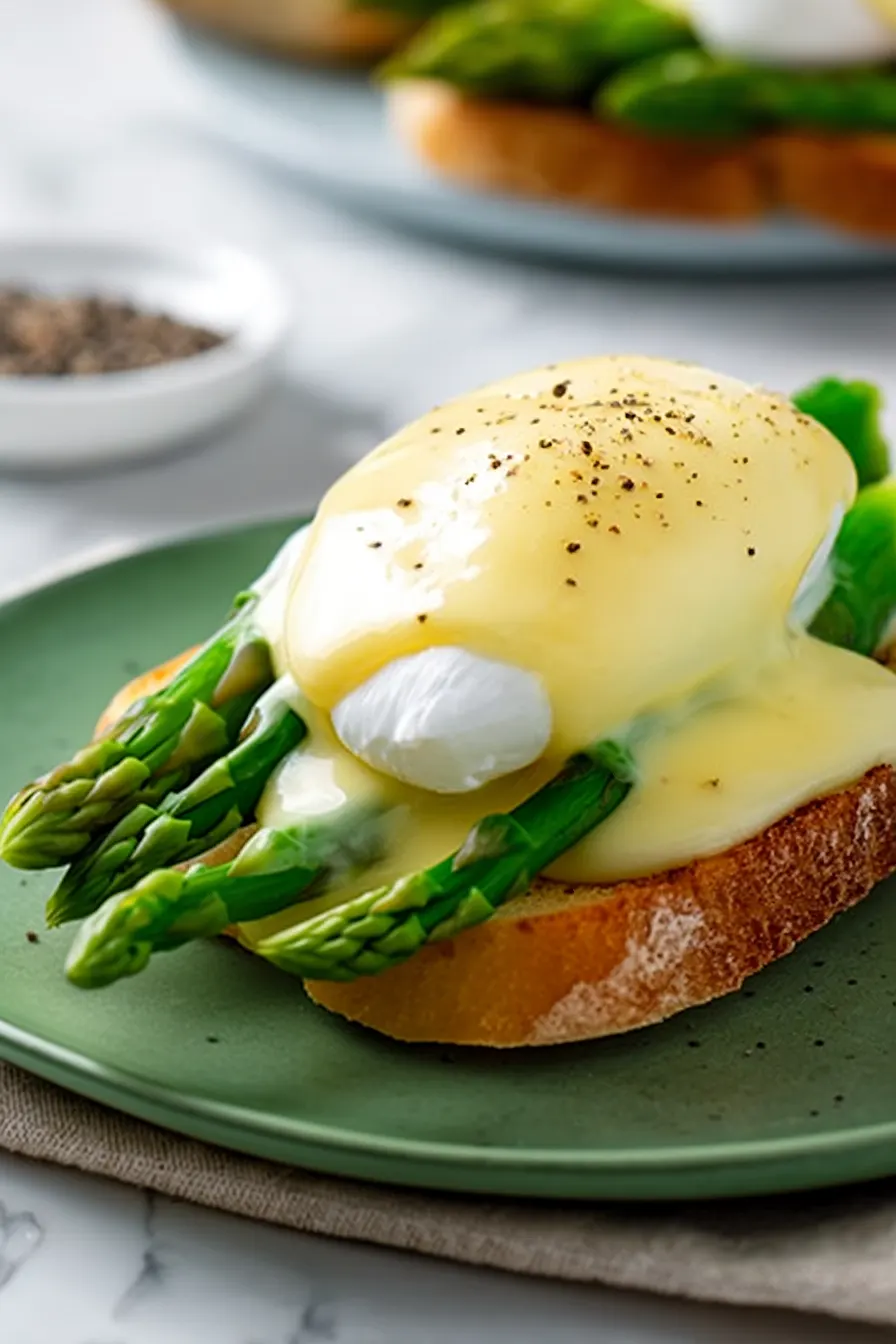
This eggs benedict with asparagus brings together all those classic flavors you love—crispy bread, perfectly poached eggs, and rich hollandaise sauce—with a lighter, veggie-forward twist that feels both indulgent and just a little bit healthier.

Why You’ll Love This Eggs Benedict with Asparagus
- Restaurant-quality breakfast at home – You can make this classic brunch dish in your own kitchen without needing any fancy equipment or hard-to-find ingredients.
- Fresh seasonal twist – The asparagus adds a nice vegetable element and makes this feel lighter and more spring-like than traditional eggs benedict with ham or bacon.
- Simple ingredients – You probably have most of these basics in your fridge already – eggs, butter, bread, and lemon juice.
- Perfect for special occasions – This is ideal for Mother’s Day, Easter brunch, or weekend mornings when you want to treat yourself or impress guests with minimal effort.
What Kind of Asparagus Should I Use?
When shopping for asparagus for your eggs benedict, look for spears that are firm and straight with tightly closed tips. Medium-thickness asparagus tends to work best for this recipe since they’re easier to cook evenly and won’t get mushy as quickly as the thinner varieties. Fresh asparagus should have a bright green color and snap cleanly when you bend the stalks – if they’re limp or bendy, they’re past their prime. Before cooking, you’ll want to trim off the woody ends by either snapping them where they naturally break or cutting off about an inch from the bottom.

Options for Substitutions
This recipe has some room for swaps, though a few ingredients are pretty essential:
- Asparagus: If asparagus isn’t in season or you’re not a fan, try using sautéed spinach, grilled tomato slices, or even smoked salmon for a classic twist. Just cook them until tender before assembling.
- Bread: English muffins are traditional here, but thick sliced sourdough, brioche, or even bagels work great. Toast them well so they hold up under the toppings and sauce.
- Butter: For the hollandaise sauce, butter is really important and shouldn’t be substituted – it’s what gives the sauce its rich, creamy texture. Make sure to use real butter, not margarine.
- Lemon juice: Fresh lemon juice is best, but bottled will work in a pinch. You could also use white wine vinegar if that’s what you have, though it’ll change the flavor slightly.
- Eggs: The eggs are the star of this dish, so they can’t really be substituted. However, if you’re nervous about poaching, you can soft-boil them instead – just cook for about 6 minutes for a runny yolk.
Watch Out for These Mistakes While Cooking
The biggest challenge with eggs benedict is the hollandaise sauce, which can break and turn grainy if your bowl touches the simmering water or if you add the butter too quickly – keep the bowl hovering above the water and add each tablespoon of butter slowly while stirring constantly.
When poaching the eggs, adding a splash of vinegar to the water helps the whites hold together better, and creating a gentle whirlpool before dropping in each egg will give you that classic rounded shape instead of wispy strands floating everywhere.
Timing is everything with this dish, so make your hollandaise first and keep it warm in the bowl over the turned-off pot, then poach your eggs last so everything comes together hot.
If your hollandaise does break and looks curdled, don’t panic – whisk in a tablespoon of hot water or an ice cube, which often brings it back together.
What to Serve With Eggs Benedict?
Eggs benedict is pretty filling on its own, but I love adding some crispy breakfast potatoes on the side – either hash browns or roasted potato wedges work great. A light mixed greens salad with a simple vinaigrette helps balance out the richness of the hollandaise sauce and makes the meal feel a bit more complete. Fresh fruit like sliced melon, berries, or grapefruit segments are another good option if you want something refreshing alongside all that buttery goodness. For brunch gatherings, I’ll sometimes set out a platter of bacon or breakfast sausage links so everyone can grab a piece or two if they want some extra protein.
Storage Instructions
Best Fresh: Eggs Benedict is really one of those dishes that tastes best when you make it fresh and eat it right away. The poached eggs and hollandaise sauce don’t hold up well in the fridge, so I’d recommend only making what you plan to eat.
Hollandaise Sauce: If you do have leftover hollandaise, you can store it in an airtight container in the fridge for up to 2 days. When you reheat it, use a double boiler or microwave in short 10-second bursts, whisking constantly to bring it back together without scrambling the eggs.
Prep Ahead: You can blanch the asparagus a day ahead and keep it in the fridge, then just warm it up quickly before serving. The hollandaise can also be made about 30 minutes before you need it and kept warm in a bowl over hot water, stirring occasionally.
| Preparation Time | 20-30 minutes |
| Cooking Time | 20-30 minutes |
| Total Time | 40-60 minutes |
| Level of Difficulty | Medium |
| Servings | 4 servings |
Estimated Nutrition
Estimated nutrition for the whole recipe (without optional ingredients):
- Calories: 1050-1200
- Protein: 36-42 g
- Fat: 72-82 g
- Carbohydrates: 75-85 g
Ingredients
For the asparagus and base:
- 1 tsp oil
- 12 asparagus (woody ends trimmed off)
- 4 slices bread (I always use Pepperidge Farm Hearty White)
- Pinch of black pepper
For the hollandaise sauce:
- 3 egg yolks
- 3/4 cup butter (I prefer Kerrygold unsalted butter for this)
- 1.5 tsp lemon juice (freshly squeezed for best acidity)
- 3/4 tsp salt
- Pinch of cayenne pepper
For the eggs:
- 4 eggs
Step 1: Prepare the Hollandaise Sauce Base
- 3 egg yolks
Start the hollandaise first since it requires gentle attention and can hold warm while you prepare other components.
Whisk the 3 egg yolks in a heatproof bowl until they become pale and slightly thickened, about 1 minute.
Set the bowl over a pot of simmering water (the bowl should not touch the water), and continue whisking constantly for about 3 minutes until the mixture reaches ribbon stage and is noticeably thicker.
This gentle heat cooks the yolks safely while building their structure.
Remove from heat and set aside—you’ll finish this sauce after the other elements are cooking.
Step 2: Sear the Asparagus and Toast the Bread
- 1 tsp oil
- 12 asparagus
- Pinch of salt
- Pinch of black pepper
- 4 slices bread
While the egg yolk base cools slightly, heat 1 tsp oil in a skillet over medium-high heat.
Add the trimmed asparagus and sauté for 5-10 minutes, stirring occasionally, until tender and lightly caramelized.
Season with a pinch of salt and black pepper, then set aside on a warm plate.
I like to get a little color on the asparagus—it adds sweetness and depth that plain steamed asparagus lacks.
In the same pan or a separate skillet, butter and lightly toast the 4 bread slices until golden and warm.
Step 3: Finish the Hollandaise Sauce
- 3/4 cup butter
- 1.5 tsp lemon juice
- 3/4 tsp salt
- Pinch of cayenne pepper
Return to your egg yolk mixture and begin whisking in the 3/4 cup butter one tablespoon at a time, ensuring each addition is fully incorporated before adding the next.
The sauce should emulsify into a smooth, creamy consistency.
Once all the butter is incorporated, whisk in 1.5 tsp fresh lemon juice and 3/4 tsp salt, then season with a pinch of cayenne pepper.
The acidity of fresh lemon juice is crucial here—it brightens the richness and helps prevent the sauce from breaking.
If the sauce seems too thick, whisk in a tiny splash of warm water.
Keep the sauce warm but not hot.
Step 4: Poach the Eggs
- 4 eggs
Bring a separate pot of water to a gentle simmer.
Carefully crack each of the 4 eggs into the simmering water and cook for exactly 3 minutes, until the whites are set but the yolks remain soft and runny.
Use a slotted spoon to gently remove each egg, allowing excess water to drain.
I find that simmering—not boiling—gives you perfectly tender egg whites without the tough, rubbery edges you get from boiling.
Step 5: Assemble and Serve
- toasted bread from Step 2
- seared asparagus from Step 2
- poached eggs from Step 4
- hollandaise sauce from Step 3
Place each toasted bread slice on a plate and top with a portion of the seared asparagus from Step 2.
Carefully nestle one poached egg from Step 4 on top of the asparagus.
Pour the warm hollandaise sauce from Step 3 generously over the egg and asparagus, allowing it to cascade onto the toast.
Finish with a light sprinkle of salt and black pepper.
Serve immediately while everything is still warm.
Buttery Eggs Benedict with Asparagus
Ingredients
Method
- Start the hollandaise first since it requires gentle attention and can hold warm while you prepare other components. Whisk the 3 egg yolks in a heatproof bowl until they become pale and slightly thickened, about 1 minute. Set the bowl over a pot of simmering water (the bowl should not touch the water), and continue whisking constantly for about 3 minutes until the mixture reaches ribbon stage and is noticeably thicker. This gentle heat cooks the yolks safely while building their structure. Remove from heat and set aside—you'll finish this sauce after the other elements are cooking.
- While the egg yolk base cools slightly, heat 1 tsp oil in a skillet over medium-high heat. Add the trimmed asparagus and sauté for 5-10 minutes, stirring occasionally, until tender and lightly caramelized. Season with a pinch of salt and black pepper, then set aside on a warm plate. I like to get a little color on the asparagus—it adds sweetness and depth that plain steamed asparagus lacks. In the same pan or a separate skillet, butter and lightly toast the 4 bread slices until golden and warm.
- Return to your egg yolk mixture and begin whisking in the 3/4 cup butter one tablespoon at a time, ensuring each addition is fully incorporated before adding the next. The sauce should emulsify into a smooth, creamy consistency. Once all the butter is incorporated, whisk in 1.5 tsp fresh lemon juice and 3/4 tsp salt, then season with a pinch of cayenne pepper. The acidity of fresh lemon juice is crucial here—it brightens the richness and helps prevent the sauce from breaking. If the sauce seems too thick, whisk in a tiny splash of warm water. Keep the sauce warm but not hot.
- Bring a separate pot of water to a gentle simmer. Carefully crack each of the 4 eggs into the simmering water and cook for exactly 3 minutes, until the whites are set but the yolks remain soft and runny. Use a slotted spoon to gently remove each egg, allowing excess water to drain. I find that simmering—not boiling—gives you perfectly tender egg whites without the tough, rubbery edges you get from boiling.
- Place each toasted bread slice on a plate and top with a portion of the seared asparagus from Step 2. Carefully nestle one poached egg from Step 4 on top of the asparagus. Pour the warm hollandaise sauce from Step 3 generously over the egg and asparagus, allowing it to cascade onto the toast. Finish with a light sprinkle of salt and black pepper. Serve immediately while everything is still warm.