I didn’t grow up eating Greek salad, so when I first tried it at a friend’s potluck in my twenties, I couldn’t believe how something so simple could taste that good. All those briny olives, tangy feta, and crunchy vegetables tossed in a garlicky dressing—it was love at first bite.
These days, I make Greek salad all the time, but I’ve added my own little twist: avocado. I know it’s not traditional, but hear me out. The creamy avocado pairs perfectly with the salty feta and sharp red onion, and it makes the salad filling enough to serve as a main course. My family requests this version on repeat during the summer when tomatoes are at their best, and honestly, I never get tired of it.
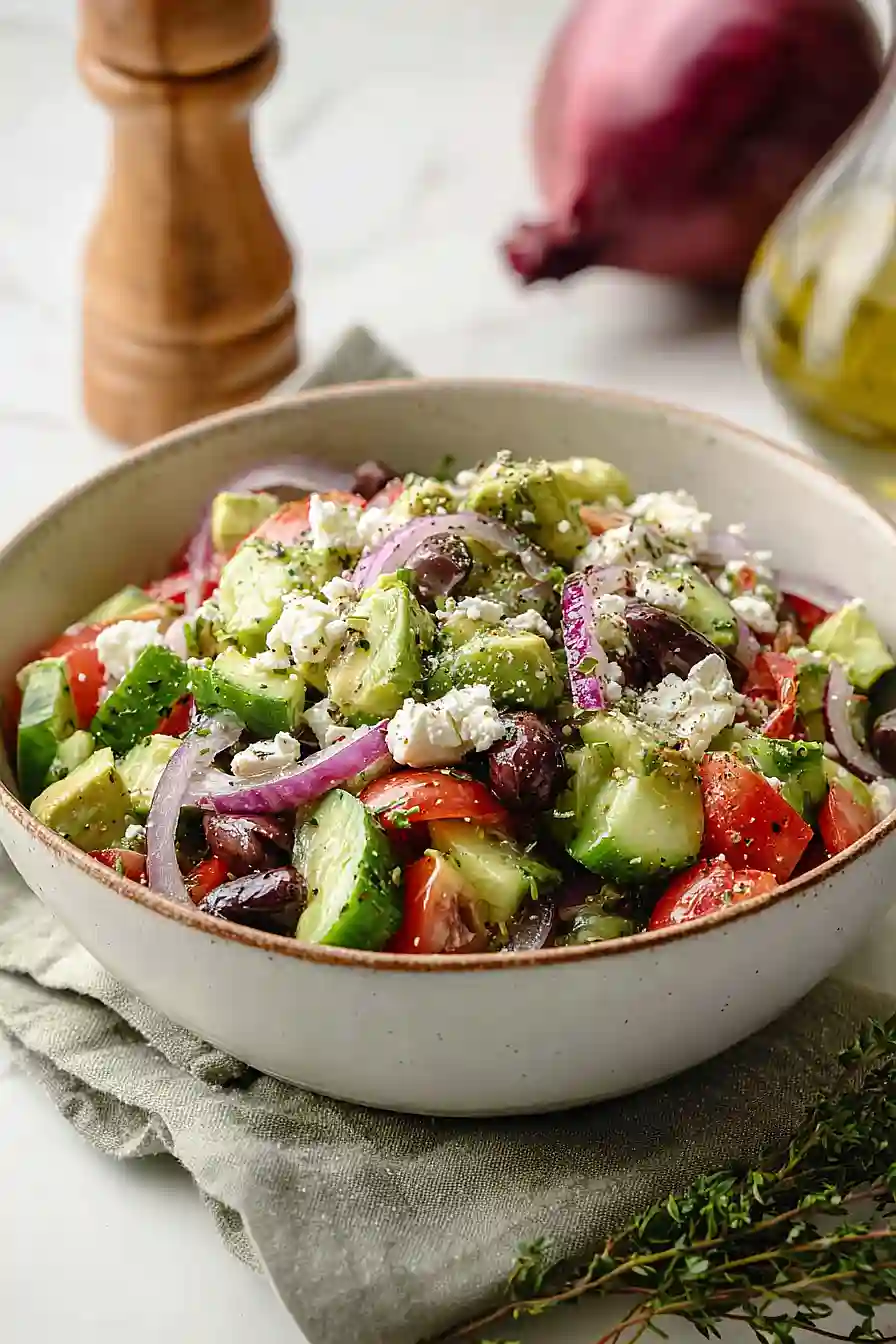
Why You’ll Love This Greek Salad
- Ready in 15 minutes – This salad comes together super fast, making it perfect for busy weeknights when you need something healthy on the table quickly.
- Fresh, simple ingredients – You’re working with crisp vegetables and pantry staples that are easy to find at any grocery store.
- Creamy avocado twist – Adding avocado to the classic Greek salad gives you extra healthy fats and a smooth, buttery texture that pairs perfectly with the tangy feta and olives.
- Light but satisfying – This salad is filling enough to serve as a main dish for lunch or a side that won’t weigh you down at dinner.
- No cooking required – Just chop, toss, and enjoy—no stove or oven needed, which also means no extra dishes to clean up.
What Kind of Tomatoes Should I Use?
For Greek salad, you really can’t go wrong with most tomato varieties, but some work better than others. Roma tomatoes are a solid choice because they’re meaty and don’t release too much water, which keeps your salad from getting soggy. Vine-ripened or beefsteak tomatoes also work great if you want bigger, juicier pieces. Whatever you choose, make sure your tomatoes are ripe but still firm – you want them to hold their shape when you cut them into chunks. If it’s winter and fresh tomatoes aren’t at their peak, cherry or grape tomatoes can be a good backup since they tend to have better flavor year-round.
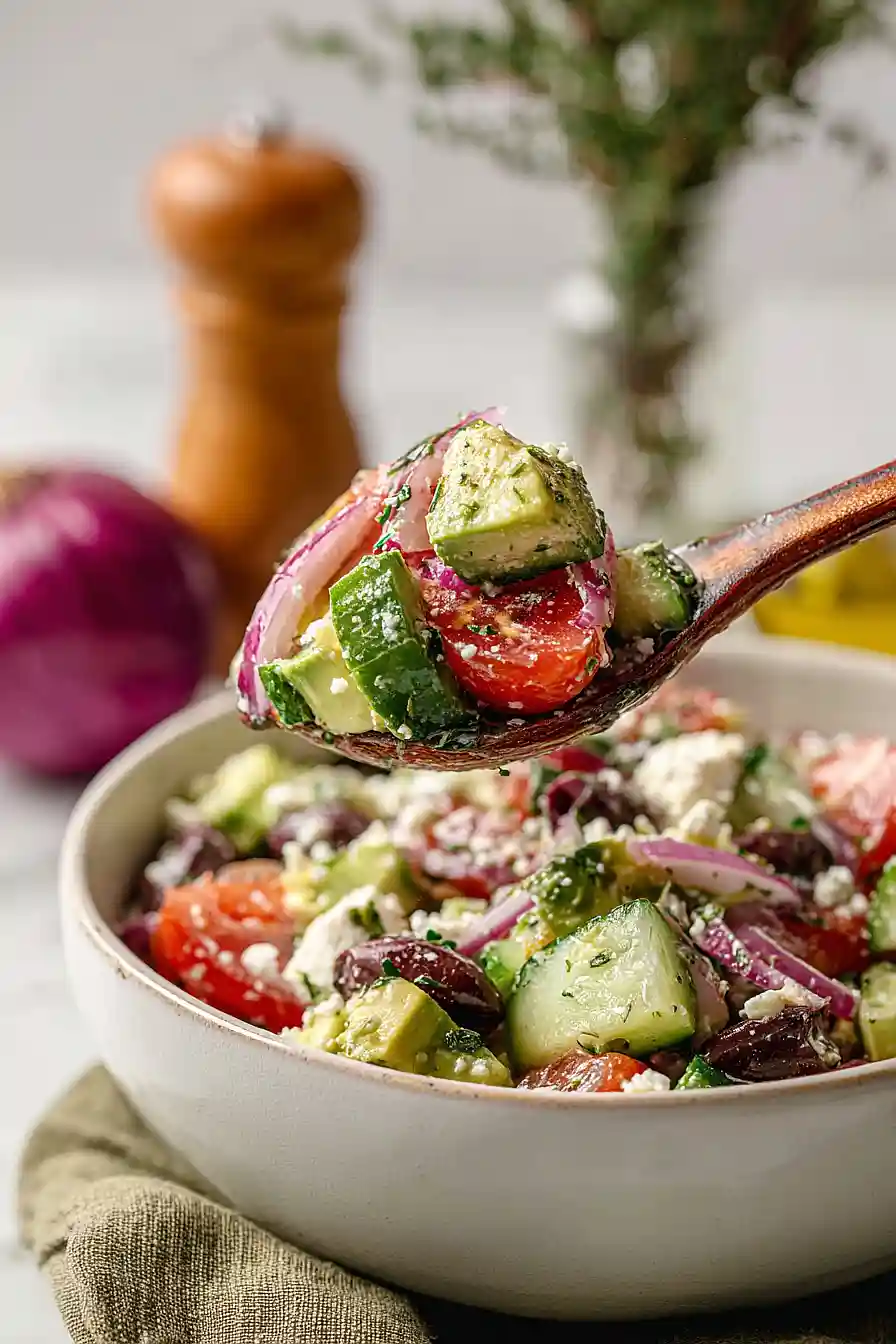
Options for Substitutions
This Greek salad is pretty forgiving when it comes to swapping ingredients:
- Kalamata olives: If you can’t find kalamata olives, regular black olives work fine. Green olives will give you a different flavor profile but still taste great in this salad.
- Feta cheese: Traditional feta is best here, but if you need a substitute, try crumbled goat cheese for a similar tangy taste. For a dairy-free option, you can leave it out entirely or use a plant-based feta alternative.
- Red wine vinegar: White wine vinegar or lemon juice both work as substitutes. If using lemon juice, start with 1/3 cup and add more to taste since it’s more tart.
- Green bell pepper: Red, yellow, or orange bell peppers all work equally well. You can also mix colors for a more colorful presentation.
- Avocado: While avocado adds creaminess to this salad, it’s not traditional in Greek salad, so you can skip it if you prefer a more authentic version or if avocados aren’t available.
- Parsley: Fresh dill or mint are common in Greek cooking and make great substitutes. Use the same amount as the parsley called for.
Watch Out for These Mistakes While Cooking
The biggest mistake when making Greek salad is adding the dressing too early, which causes the vegetables to release water and makes everything watery and limp – always dress your salad right before serving to keep it crisp and fresh.
Another common error is cutting the vegetables too small, so aim for chunky, bite-sized pieces that hold up well and give you that satisfying crunch in every forkful.
To keep your avocados from turning brown, add them at the very last minute and toss them gently with a bit of lemon juice if you’re not serving immediately.
Finally, don’t skip salting your cucumber and letting it drain for 10 minutes before adding it to the salad – this simple step removes excess moisture and prevents your salad from getting soggy.
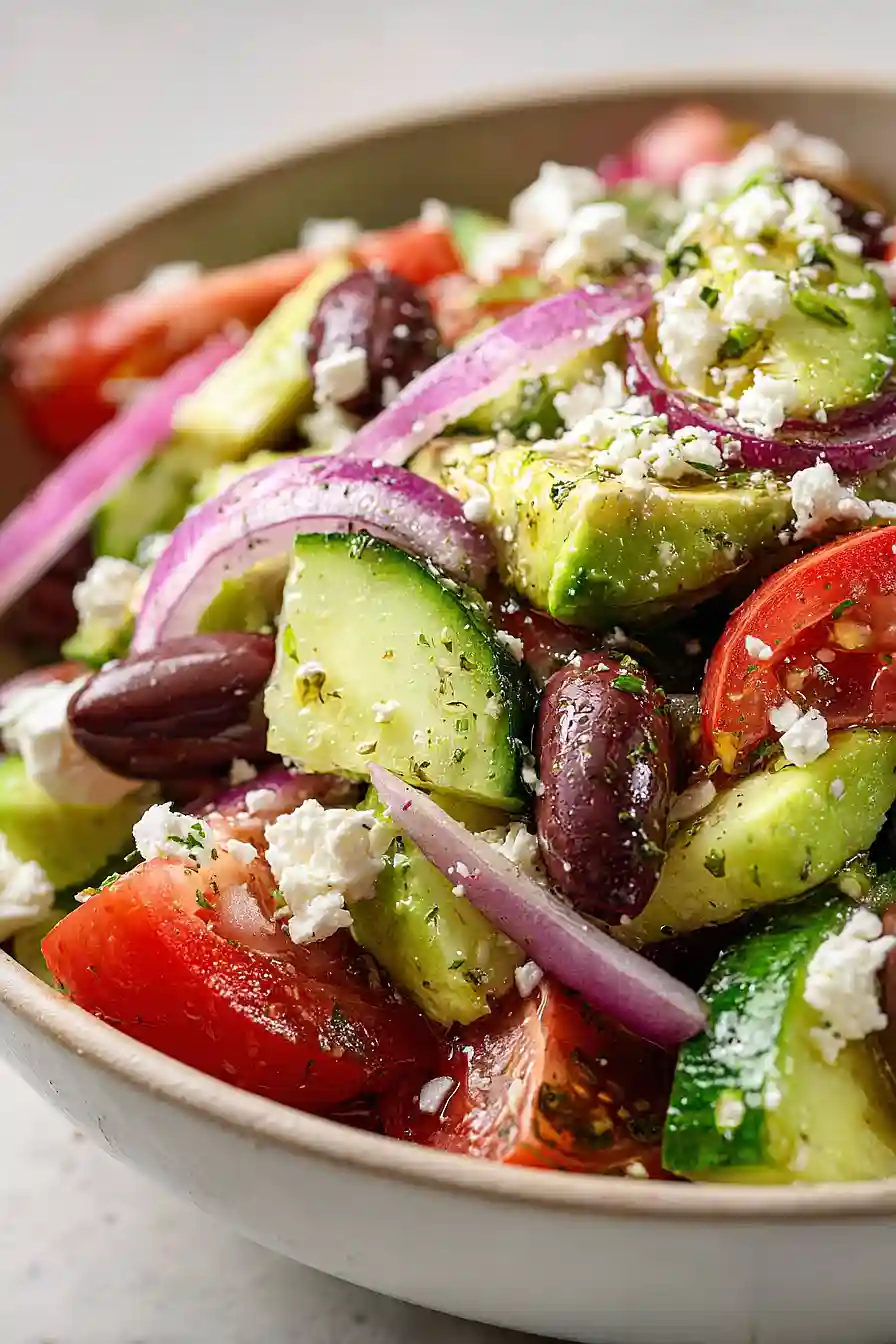
What to Serve With Greek Salad?
Greek salad is pretty filling on its own thanks to the feta and avocado, but it pairs really well with grilled chicken, lamb kebabs, or even some crispy falafel if you want to keep things vegetarian. I love serving it alongside warm pita bread or flatbread that you can use to scoop up any leftover dressing and toppings from the bowl. For a complete Mediterranean meal, try it with some hummus, tzatziki, or baba ganoush on the side. If you’re looking for something heartier, this salad works great as a side dish with grilled fish like salmon or sea bass, or even with some lemon herb roasted chicken thighs.
Storage Instructions
Store: This salad is best enjoyed fresh, but you can prep the ingredients ahead of time. Keep the chopped veggies (except avocado) in an airtight container in the fridge for up to 2 days, and store the dressing separately. Add the avocado and feta right before serving to keep everything fresh and crisp.
Make Ahead: If you want to get a head start, chop all your veggies the night before and whisk together the dressing. Just wait to cut the avocado until you’re ready to eat, since it browns quickly. Toss everything together right before serving for the best texture and flavor.
Leftovers: Already dressed salad will get a bit watery after a day, but it’s still good for about 24 hours in the fridge. The cucumbers and tomatoes release moisture over time, so don’t expect it to be as crisp. It’s honestly better to just make what you’ll eat in one sitting.
| Preparation Time | 10-15 minutes |
| Cooking Time | 0-0 minutes |
| Total Time | 10-15 minutes |
| Level of Difficulty | Easy |
| Servings | 6 servings |
Estimated Nutrition
Estimated nutrition for the whole recipe (without optional ingredients):
- Calories: 1700-1900
- Protein: 32-38 g
- Fat: 150-165 g
- Carbohydrates: 70-80 g
Ingredients
For the dressing:
- 3/4 cup olive oil (I prefer Filippio Berio Extra Virgin for dressings)
- 1/2 cup red wine vinegar
- 2 garlic cloves (freshly minced for best flavor)
- 2 tsp oregano
- 1/2 tsp salt
- 1/2 tsp pepper
- 1/4 tsp sugar
For the salad:
- 1 large cucumber
- 1 lb tomatoes
- 1/2 cup red onion (thinly sliced into half-moons)
- 1 green bell pepper
- 1 1/4 cups kalamata olives (I use Mezzetta pitted for convenience)
- 1/4 cup parsley
- 2 avocados (cubed into 1-inch pieces)
- 1 1/4 cups feta cheese
Step 1: Prepare the Vinaigrette Dressing
- 3/4 cup olive oil
- 1/2 cup red wine vinegar
- 2 garlic cloves, freshly minced
- 2 tsp oregano
- 1/2 tsp salt
- 1/2 tsp pepper
- 1/4 tsp sugar
In a medium bowl, whisk together the olive oil, red wine vinegar, minced garlic, oregano, salt, pepper, and sugar until well combined and emulsified.
Let the dressing sit for a few minutes to allow the flavors to meld together.
I find that freshly minced garlic makes a noticeable difference in the dressing’s brightness, so don’t skip that step if you can help it.
Step 2: Prep All Vegetables and Aromatics
- 1 large cucumber
- 1 lb tomatoes
- 1/2 cup red onion
- 1 green bell pepper
- 1/4 cup parsley
While the dressing develops, prepare all your vegetables: dice the cucumber into bite-sized pieces, chop the tomatoes into chunks, thinly slice the red onion into half-moons, dice the green bell pepper into similar-sized pieces, and roughly chop the parsley.
Having all your vegetables prepped and ready makes assembly quick and prevents the avocado from oxidizing while you’re still chopping.
Step 3: Assemble and Dress the Salad
- prepped vegetables from Step 2
- 1 1/4 cups kalamata olives
- vinaigrette from Step 1
In a large serving bowl, combine the cucumber, tomatoes, red onion, green bell pepper, kalamata olives, and parsley from Step 2.
Pour the vinaigrette from Step 1 over the vegetables and toss gently to coat everything evenly.
Let the salad sit for 2-3 minutes so the vegetables can absorb some of the dressing and the flavors blend together.
Step 4: Add Avocado and Feta, Then Serve
- 2 avocados, cubed
- 1 1/4 cups feta cheese
Just before serving, gently fold in the cubed avocados and 1 cup of the feta cheese into the salad.
Add the avocado at the end to prevent it from breaking down or oxidizing.
Top the salad with the remaining 1/4 cup of feta cheese for a beautiful presentation and extra flavor.
Healthy Greek Salad with Avocado
Ingredients
Method
- In a medium bowl, whisk together the olive oil, red wine vinegar, minced garlic, oregano, salt, pepper, and sugar until well combined and emulsified. Let the dressing sit for a few minutes to allow the flavors to meld together. I find that freshly minced garlic makes a noticeable difference in the dressing's brightness, so don't skip that step if you can help it.
- While the dressing develops, prepare all your vegetables: dice the cucumber into bite-sized pieces, chop the tomatoes into chunks, thinly slice the red onion into half-moons, dice the green bell pepper into similar-sized pieces, and roughly chop the parsley. Having all your vegetables prepped and ready makes assembly quick and prevents the avocado from oxidizing while you're still chopping.
- In a large serving bowl, combine the cucumber, tomatoes, red onion, green bell pepper, kalamata olives, and parsley from Step 2. Pour the vinaigrette from Step 1 over the vegetables and toss gently to coat everything evenly. Let the salad sit for 2-3 minutes so the vegetables can absorb some of the dressing and the flavors blend together.
- Just before serving, gently fold in the cubed avocados and 1 cup of the feta cheese into the salad. Add the avocado at the end to prevent it from breaking down or oxidizing. Top the salad with the remaining 1/4 cup of feta cheese for a beautiful presentation and extra flavor.